
Views: 0 Author: Site Editor Publish Time: 2025-09-19 Origin: Site
When machining large, complex parts, the choice of lathe can make or break efficiency. Horizontal and vertical turning machines each offer unique benefits for different needs. In this article, we'll dive into the key differences between them. You'll learn which type is best suited for your manufacturing process.
The most fundamental difference between horizontal vs vertical turning lies in the orientation of the spindle.
Horizontal Turning: The spindle is positioned horizontally, and the workpiece is mounted on a horizontal axis. This design is perfect for long, cylindrical parts like shafts or rods that require precise rotation.
Vertical Turning: In vertical turning, the spindle is placed vertically, allowing for easier handling of heavy and large diameter workpieces. The vertical design aids in gravity-assisted clamping, providing more stability during machining.
The choice of spindle orientation impacts not only part positioning but also tool access and stability during cutting, crucial for achieving the desired precision.
Horizontal Lathes: These machines are often used for parts with symmetrical, elongated shapes. Horizontal lathes can accommodate parts that need to be rotated for extensive shaping, such as shafts or gears.
Vertical Lathes: With a vertical turning machine, parts are placed upright, allowing the weight of heavy components to be managed more easily. These machines are better suited for large, heavy, and complex workpieces such as turbine rotors or large flanges.
Another key consideration is the size of the machine and how much space it occupies.
Vertical Turning Machines generally have a smaller footprint than horizontal ones, making them more suitable for shops with limited space.
Horizontal Turning Machines, while more versatile for different part shapes, typically require more floor space to accommodate their length and feed systems.
Tip: When space is limited in your shop, vertical lathes are a good choice, as they can handle large parts while occupying less floor area.
Horizontal turning is well-suited for various applications that require a long, continuous cutting process. Here are some of its most common uses:
Horizontal lathes are ideal for producing parts like shafts, gears, and pipes, which require consistent rotation for precision cutting. The ability to use automatic bar feeders further enhances productivity, especially in high-volume manufacturing runs.
One major advantage of horizontal turning machines is their compatibility with automatic bar feeders, allowing for continuous machining with minimal operator intervention. This automation makes horizontal lathes perfect for industries requiring high volumes of parts, such as automotive and industrial manufacturing.
Vertical turning machines excel at handling large and heavy parts that may be challenging for horizontal lathes. Here are the top applications for vertical turning:
Vertical turning shines when machining large-diameter parts such as turbine blades, flywheels, or large flanges. The upright position allows gravity to assist in clamping the workpiece, making it easier to manage heavy components without the need for excessive force.
Thanks to its robust design, vertical turning machines can manage large, heavy workpieces that would be difficult to handle on horizontal machines. Industries like aerospace, oil and gas, and automotive rely on vertical lathes to machine these larger, heavier components with precision. For large parts with a significant weight, vertical turning provides greater ease of operation and precision compared to horizontal turning.
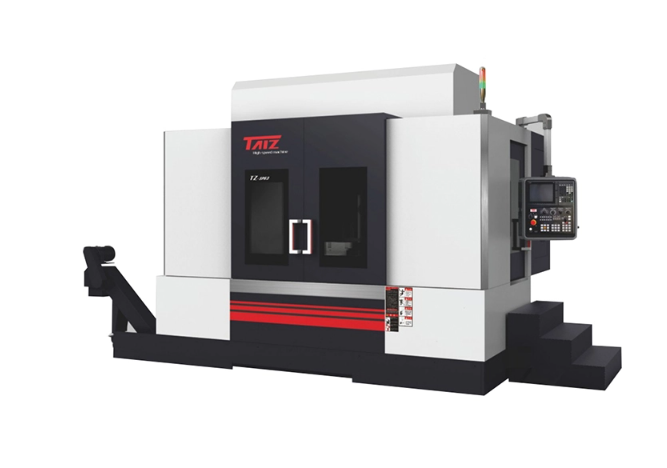
One of the key benefits of vertical turning machining is gravity-assisted clamping. The vertical orientation allows the workpiece to be held firmly on the rotating table with minimal clamping force. This reduces the likelihood of deformation during cutting, improving both the quality and precision of the final product.
Vertical lathes provide easier access to the workpiece, especially when machining complex or intricate geometries. The setup allows operators to inspect and adjust the part with greater ease, making vertical turning ideal for more complicated shapes and geometries.
Vertical lathes offer superior stability during machining. The vertical design reduces vibrations, ensuring more consistent cutting. This leads to better dimensional accuracy and surface finish, essential for high-precision components that need to meet strict tolerances.
While vertical turning machines are excellent for large parts, they are also capable of machining smaller parts. However, the size of the rotating table will limit the maximum workpiece diameter. The key takeaway is that vertical turning is best suited for parts that need heavy-duty support during machining, but smaller parts with specific geometries can also benefit from the enhanced precision of vertical lathes.
A significant advantage of vertical turning machining is its space efficiency. Compared to horizontal lathes, vertical machines occupy less floor space, making them a good choice for shops with limited space. Despite their compact design, vertical turning machines can handle large parts and heavy workpieces, offering an excellent balance of size and capability.
Tip: If floor space is a concern, vertical lathes may offer the most efficient solution, enabling heavy-duty machining in a smaller footprint.
Horizontal turning machines are versatile and can accommodate a range of workpieces. Some of their key advantages and uses include:
Horizontal turning is ideal for machining parts like shafts and long cylindrical pieces. These types of parts benefit from the continuous rotation offered by horizontal lathes, which allows for consistent cuts along the length of the workpiece.
Horizontal lathes are well-suited for integrating bar feeders, which automatically supply stock material into the lathe. This capability makes horizontal turning machines highly efficient for mass production runs where minimal operator intervention is needed.
One of the main reasons horizontal lathes remain popular in various industries is their flexibility. These machines can accommodate a wide range of part shapes and sizes, making them suitable for a variety of machining applications, from automotive to industrial parts.
Horizontal lathes excel at machining long, large parts. Additionally, their design ensures that chips are efficiently removed during the cutting process, preventing buildup and ensuring smoother machining operations.
When it comes to high-volume production, horizontal turning offers significant cost benefits. Their ability to continuously machine parts using bar feeders and automated systems makes them ideal for mass production, reducing both labor and production costs. If you're looking to scale up production, horizontal turning machines with automated feeders can significantly improve your workflow and reduce operational costs.
When choosing between horizontal and vertical turning, shop space, machine capabilities, and the type of parts being produced must all be taken into account.
Vertical Turning: Ideal for shops with limited space or those needing to machine large, heavy components.
Horizontal Turning: Better suited for continuous, high-volume machining and long, cylindrical parts.
The size, weight, and geometry of the part play a significant role in the decision. Vertical lathes handle larger, heavier components more effectively, while horizontal lathes excel with long, thin, cylindrical parts.
Cycle time, automation needs, and production volume should all influence the choice. Horizontal lathes with bar feeders are best for mass production, while vertical lathes are preferred for larger, more complex workpieces.
What are the dimensions and weight of the parts you’re machining?
Is automation or a high-volume production process essential for your operation?
How much floor space do you have available?
Will ergonomics and ease of part handling be critical for your operation?
Tip: Assess your shop's needs carefully to determine whether a vertical or horizontal lathe will provide the best efficiency, precision, and cost-effectiveness.
Understanding the key differences between horizontal vs vertical turning is crucial for selecting the right machine. Vertical lathes excel in handling heavy, large-diameter parts and offer space efficiency, while horizontal lathes are better for continuous, high-precision machining of cylindrical parts.
By evaluating part types, available space, and operational goals, manufacturers can make informed decisions. This approach improves productivity, reduces costs, and ensures better outcomes. If you're uncertain about which lathe to choose, consulting with experts like Taiz Intelligence can help you find the right solution for your manufacturing process.
A: Horizontal turning machines are ideal for cylindrical parts and continuous machining, while vertical turning machines are best for large-diameter, heavy parts. Both have unique benefits depending on part size and geometry.
A: Vertical turning machining is recommended for heavy, large-diameter parts. It provides better stability, easier access for inspection, and efficient chip removal, making it ideal for complex components.
A: The decision depends on your project’s specific needs. Horizontal turning works best for continuous, high-precision machining, while vertical lathes are great for large, heavy parts and limited floor space.


