
Views: 0 Author: Site Editor Publish Time: 2026-08-07 Origin: Site
Are you torn between CNC machining and electrochemical machining (ECM)? Both processes have unique advantages and applications. In this article, we’ll explore the definitions of CNC machining and ECM, compare their mechanisms, and discuss their importance in modern manufacturing. Get ready to discover which method suits your needs best!
CNC machining, or Computer Numerical Control machining, is a manufacturing process that utilizes computer-controlled machines to create parts and components. It begins with a digital model, usually designed using CAD (Computer-Aided Design) software. This model is translated into a set of instructions that guide the machine's movements. The CNC machine uses various tools, such as drills, lathes, or mills, to shape the material into the desired form.
The process involves several steps:
Design: Create a 3D model using CAD software.
Programming: Convert the design into G-code, which contains instructions for the CNC machine.
Setup: Secure the workpiece on the machine and load the necessary tools.
Machining: The machine follows the G-code to cut, drill, or mill the material.
Finishing: After machining, parts may undergo additional processes, like polishing or deburring, to achieve the final finish.
CNC machining encompasses several types of processes, each suited for different applications:
CNC Milling: Involves rotating cutting tools to remove material from a stationary workpiece. It's ideal for creating complex shapes and features.
CNC Turning: A lathe rotates the workpiece against a stationary cutting tool. This process is excellent for cylindrical shapes.
CNC Plasma Cutting: Uses a high-velocity jet of ionized gas to cut through metal. It's suitable for thick materials.
CNC Laser Cutting: Employs focused laser beams to cut or engrave materials with high precision. It's effective for intricate designs.
CNC Waterjet Cutting: Utilizes high-pressure water mixed with abrasives to cut through various materials without heat.
CNC machining can work with a wide range of materials, including:
Metals: Aluminum, stainless steel, brass, titanium, and more. These materials are commonly used in industries like aerospace and automotive due to their strength and durability.
Plastics: PVC, acrylic, and polycarbonate are popular in prototyping and manufacturing lightweight components.
Composites: Materials like carbon fiber and fiberglass are used for specialized applications, particularly in aerospace.
Wood: CNC machines can also work with various types of wood for furniture and decorative items.
The versatility of CNC machining allows manufacturers to choose the best materials for their specific needs, ensuring optimal performance and longevity of the parts produced.
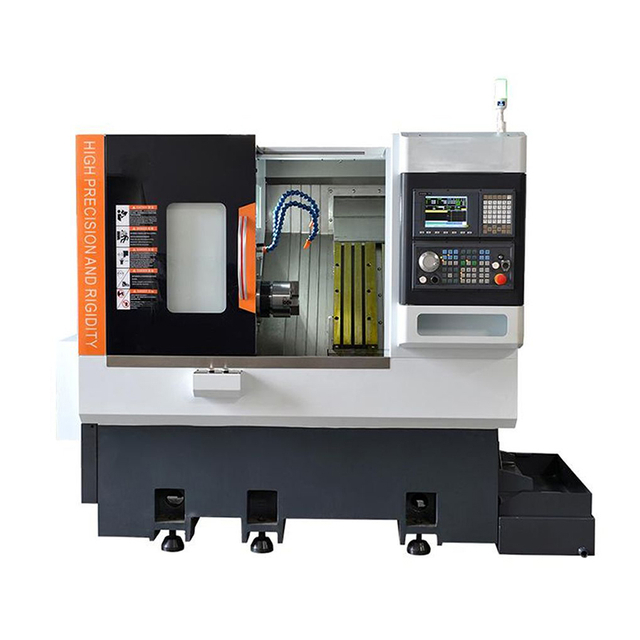
Electrochemical Machining (ECM) is a non-contact manufacturing process that removes material from a workpiece using electrochemical reactions. This technique involves using an electrolyte solution and two electrodes: the workpiece acts as the anode (positive electrode), and a specially shaped tool serves as the cathode (negative electrode). When direct current flows through the electrolyte, it facilitates the dissolution of metal ions from the workpiece, allowing it to be shaped according to the tool's geometry.
The process can be broken down into a few key steps:
Setup: The workpiece and tool are immersed in an electrolyte solution, typically a conductive liquid like sodium chloride or sodium nitrate.
Current Application: A direct current is applied between the tool and the workpiece. The electrolyte facilitates ion movement, leading to material removal.
Material Removal: As the current flows, metal ions from the workpiece dissolve into the electrolyte, effectively shaping the workpiece without physical contact.
Electrolyte Circulation: Continuous circulation of the electrolyte helps maintain optimal conditions, ensuring efficient material removal and cooling.
There are several types of ECM processes, each tailored for specific applications:
Electrochemical Grinding (ECG): Combines electrochemical dissolution with traditional grinding. It’s effective for hard materials, reducing mechanical stress while removing material.
Electrochemical Drilling: Ideal for creating small, precise holes in tough materials. This technique focuses on localized material removal.
Electrochemical Deburring: Used to remove burrs and sharp edges from machined parts, ensuring smooth finishes without damaging the workpiece.
ECM is particularly advantageous for machining a variety of conductive materials, especially those that are difficult to machine using traditional methods. Some common materials include:
Titanium Alloys: Known for their strength and lightweight properties, often used in aerospace applications.
Nickel-Based Superalloys: These materials withstand high temperatures, making them ideal for turbine components.
Stainless Steels: Commonly used in medical devices and automotive parts due to their corrosion resistance.
However, ECM is limited to electrically conductive materials. Non-conductive materials, such as ceramics and plastics, cannot be machined using this method.
CNC machining and electrochemical machining (ECM) operate on fundamentally different principles, leading to distinct advantages and applications. CNC machining uses mechanical tools to remove material through direct contact, while ECM relies on electrochemical reactions to dissolve material without any physical contact.
In CNC machining, a rotating tool cuts into the workpiece as per programmed instructions. This process involves various cutting techniques, such as milling, turning, and drilling. The material is removed in chips, and the tool wears down over time due to friction and heat generated during cutting.
In contrast, ECM employs an electrolyte solution and two electrodes—the workpiece acts as the anode, and the tool serves as the cathode. When direct current passes through the electrolyte, it facilitates the dissolution of metal ions from the workpiece. This non-contact process means there’s no heat generated, preserving the material's integrity and allowing for intricate shapes to be machined with high precision.
Material compatibility is another critical factor where CNC machining and ECM diverge. CNC machining is versatile, handling a wide range of materials, including metals, plastics, and composites. It can effectively machine both soft and hard materials, making it suitable for various applications across industries.
ECM, however, is limited to electrically conductive materials. It excels at machining hard-to-cut alloys like titanium and nickel-based superalloys, often used in aerospace and medical applications. But it cannot process non-conductive materials, such as ceramics or plastics. This limitation restricts its use compared to the broader applicability of CNC machining.
Surface finish quality is paramount in many manufacturing processes. CNC machining can achieve good surface finishes, but it often leaves tool marks and may require additional finishing processes, such as polishing or grinding, to meet strict quality standards.
On the other hand, ECM produces exceptionally smooth surfaces due to its non-contact nature. The electrochemical process eliminates tool marks, resulting in a mirror-like finish. This makes ECM particularly advantageous for applications where surface integrity is critical, such as in medical devices or aerospace components.
In summary, while CNC machining offers versatility and a broad range of material compatibility, ECM stands out for its ability to achieve high precision and superior surface finishes, albeit with limitations in material selection.
CNC machining stands out for its versatility. It can effectively work with a wide range of materials, including metals, plastics, composites, and wood. This adaptability makes it suitable for various industries, from aerospace to automotive. For instance, aluminum and stainless steel are common in aerospace components, while plastics are often used in consumer products. The ability to switch between different materials allows manufacturers to meet diverse project requirements without needing specialized equipment for each material type.
CNC machining is known for its efficiency and speed. Once the initial setup is complete, CNC machines can operate continuously, producing parts at a high rate. This is particularly beneficial for mass production, where thousands of identical parts are needed. The automation of the CNC process minimizes human error and reduces cycle times, allowing manufacturers to scale up production without sacrificing quality. For example, a CNC milling machine can produce complex parts in a fraction of the time compared to manual machining.
While CNC machining is often associated with high-volume production, it can also be cost-effective for low-volume runs. The initial setup costs may be higher, but once the system is programmed, it can produce small batches efficiently. This is advantageous for prototyping or custom projects where only a few pieces are needed. Additionally, the precision of CNC machining reduces material waste, as parts are cut to exact specifications, minimizing the need for rework or scrap.
In summary, CNC machining is a versatile, efficient, and cost-effective solution for various manufacturing needs. Its ability to process different materials, maintain high production rates, and adapt to low-volume production makes it a preferred choice for many industries.
Electrochemical Machining (ECM) stands out for its ability to produce exceptional surface finishes. The non-contact nature of ECM eliminates mechanical stresses and heat generation that can compromise material integrity. This means parts retain their original properties, making ECM ideal for fatigue-critical components like turbine blades and medical implants. The process yields mirror-like surfaces, often requiring no further finishing operations. This is a significant advantage in industries where surface quality directly impacts performance and longevity.
One of ECM's most remarkable features is its capability to machine intricate and complex geometries. Using custom cathodes, ECM can access areas that traditional machining methods struggle to reach. It excels at creating internal channels, intersecting passages, and detailed flow paths. For example, in aerospace applications, ECM can shape complex turbine blades that are difficult to produce through conventional techniques. This ability to achieve precise and complex designs opens new possibilities in manufacturing, especially for components with tight tolerances.
ECM's non-contact process results in negligible tool wear, which is a game-changer for manufacturers. Unlike traditional machining, where tools degrade over time, ECM tools maintain their shape and size throughout the machining process. This leads to reduced maintenance costs and longer tool life, making ECM a cost-effective solution for high-volume production. The elimination of tool replacement not only saves money but also minimizes downtime, enhancing overall productivity.
In summary, the advantages of ECM—superior surface quality, the ability to machine complex geometries, and low tool wear—make it an attractive option for many industries. These features enable manufacturers to produce high-quality components efficiently while maintaining strict tolerances and reducing operational costs.
CNC machining is widely used across various industries due to its versatility and precision. Here are some key sectors where CNC machining plays a crucial role:
Aerospace: CNC machining is essential for creating components like turbine blades, landing gear, and structural parts. The ability to maintain tight tolerances and complex geometries is critical in aerospace applications.
Automotive: In the automotive industry, CNC machining produces engine components, transmission parts, and custom fixtures. Its efficiency and repeatability make it ideal for both prototyping and mass production.
Medical Devices: Precision is paramount in medical device manufacturing. CNC machining is used for surgical instruments, implants, and diagnostic equipment, ensuring high-quality standards and biocompatibility.
Consumer Electronics: The electronics sector relies on CNC machining for producing enclosures, circuit boards, and connectors. The ability to work with various materials, including plastics and metals, is advantageous.
Tool and Die: CNC machining is integral in the tool and die industry, creating molds, dies, and tooling components. It allows for intricate designs and high-volume production.
Electrochemical machining (ECM) is particularly beneficial in industries that require precision and the ability to machine hard-to-cut materials. Here are some industries where ECM is advantageous:
Aerospace: ECM is ideal for manufacturing complex parts like turbine blades and fuel injectors, where surface integrity and dimensional accuracy are critical.
Medical Devices: The medical field uses ECM for producing burr-free surgical tools and implants. The process ensures high-quality finishes and maintains the integrity of sensitive materials.
Energy: In the energy sector, ECM is used to create components for turbines and engines, particularly those made from nickel-based superalloys. The ability to machine complex geometries without thermal distortion is a significant advantage.
Automotive: ECM is employed for creating intricate components in high-performance engines, such as valve seats and fuel injectors. The process allows for precise control over material removal.
Electronics: ECM is utilized for micro-machining applications in the electronics industry, producing small, intricate parts with high precision.
Aerospace Turbine Blades: A leading aerospace manufacturer used ECM to produce turbine blades from superalloys. The non-contact nature of ECM allowed for complex internal cooling channels without compromising material integrity. This resulted in improved performance and reduced lead times.
Medical Implants: A medical device company adopted ECM for machining titanium implants. The process produced smooth, burr-free surfaces, enhancing biocompatibility and reducing the need for secondary finishing operations.
Automotive Fuel Injectors: An automotive manufacturer implemented ECM to create fuel injectors with precise flow paths. This improved fuel efficiency and performance while reducing production costs due to lower tool wear.
Energy Sector Components: A company in the energy sector utilized ECM for machining parts for gas turbines. The process enabled the creation of complex geometries that traditional machining methods could not achieve, enhancing efficiency and reliability.
Choosing between CNC machining and electrochemical machining depends on various factors. Consider material compatibility, production volume, and desired surface finish. While CNC machining offers versatility with a broad range of materials, ECM excels in achieving superior surface quality and intricate designs. Future trends may see advancements in both methods, enhancing efficiency and precision. Ultimately, understanding the strengths of each process will help manufacturers make informed decisions. Taiz provides innovative machining solutions that deliver exceptional value and quality for diverse applications.
A: CNC machining, or Computer Numerical Control machining, is a manufacturing process that uses computer-controlled machines to create parts from a digital model.
A: CNC machining works by converting a CAD design into G-code, which directs the machine's tools to cut, drill, or mill the material.
A: CNC machining is versatile, able to work with various materials, while ECM is limited to electrically conductive materials.
A: CNC machining offers high production rates, cost-effectiveness for low-volume production, and versatility in material processing.
A: CNC machining can work with metals, plastics, composites, and wood, making it suitable for diverse applications.


