
Views: 0 Author: Site Editor Publish Time: 2026-06-08 Origin: Site
What should you think about when picking a five-axis machine center? You must choose a machine that fits your work. Think about how hard your parts are to make. Many businesses use cnc machining for parts with many sides. It is also used for parts that need to be very exact. Simultaneous machining helps you make hard shapes, like turbine blades. It does this with great accuracy. TAIZHENG gives you smart solutions for your work. Use these tips as a list to help you pick the best machine.
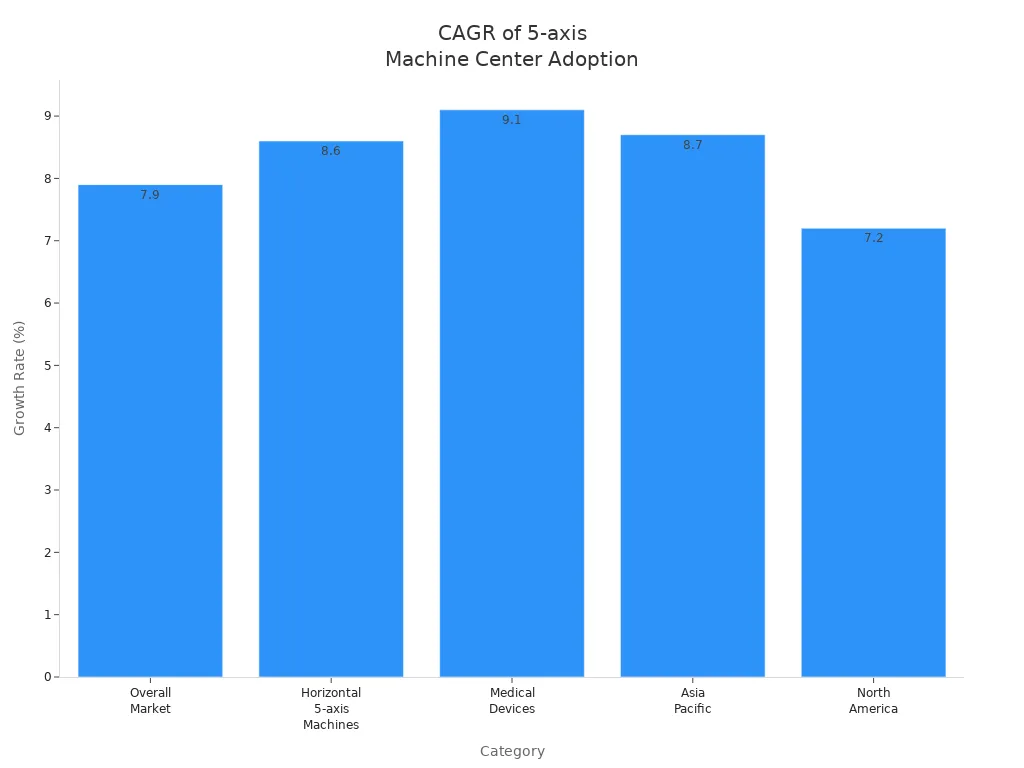
Think about how hard and big your parts are before picking a five-axis machine. This helps you get a machine that can work with hard shapes and many sides well.
Check how many parts you need to make and how exact they must be. A five-axis machine is great for parts that need to be very exact. It helps you save time and make fewer mistakes.
Pick the right machine setup for what you need. Setups like table-table or head-head are good for different jobs.
Make sure your machine has strong spindle power and is built well. This gives you better accuracy and smoother surfaces, especially with hard materials.
Find a machine with good control and programming tools. A strong CNC controller helps the machine work better and more exactly. This makes your work faster and easier.
Before you pick a five-axis machine center, look at your part’s size and how hard it is to make. If your parts have tricky shapes or need work on many sides, a 5 axis machining center can really help. You can work on five sides at once. This means you make fewer mistakes and finish faster. Many fields, like aerospace and moldmaking, use five-axis machining for parts that must be very exact and have tough shapes. Not all parts need full five-axis work, but when they do, you get better accuracy and smoother surfaces.
Tip: Five-axis machining lets you work on deep holes, undercuts, and tricky angles easily. You can make parts with smooth surfaces and work on many sides in one go.
Here are some ways people use a five-axis machine center:
Automotive molds and stamping dies
Aerospace structural components
Turbine blades and energy equipment
Medical implants and precision devices
Complex housings and box-type parts
High-end industrial machinery components
TAIZHENG knows a lot about cnc and 5 axis machining. They help you find the right machine for your job. Their machines let you work on hard parts without worry.
Think about how many parts you need and how exact they must be. A 5 axis machining center is great for important parts where shape and surface matter a lot. If you need to track your work and have proof it is correct, five-axis machining is the best way. You can set up faster and keep things accurate. This is key for fields like aerospace, medical, automotive, and oil and gas.
Five-axis systems are good for parts that must be very exact.
You can save money by doing fewer setups and less fixing.
Using special software and tool systems helps you work better.
TAIZHENG’s five-axis machine center lets you meet strict rules and make both small and big batches. You can count on their cnc machines to give you the same good results every time.
You should pick the right setup for your parts. Each design has its own strengths. Table-table, head-table, and head-head setups help with different jobs. Table-table machines keep the head still and move the table. This gives strong support for heavy cutting. Head-head machines move both axes in the spindle head. You can reach almost any angle, which is good for complex shapes. Head-table machines use both designs. You get flexibility for many sizes and shapes.
Here is a simple table that shows the main types and their uses:
Configuration | Description | Applications and Benefits |
|---|---|---|
Table-Table | Rotary axes are in the table, head does not move. | Mold making, aerospace brackets, deep undercuts. |
Head-Head | Both axes are in the spindle head, multi-angle access. | Medical implants, precision molds, constant orientation. |
Head-Table | Rotary table plus tilting spindle head. | Large parts, heavy-duty cutting, versatile machining. |
Tip: Pick a setup that fits your part size and shape. Table-table is best for heavy parts. Head-head is good for tricky angles. Head-table gives you the most flexibility.
You need to check axis travel and work envelope before you choose. Axis travel means how far each part of the machine moves. Work envelope is the space where you put your part. If you work with small parts, a trunnion table type is a good fit. For big or heavy parts, a swivel head or gantry 5-axis machining center gives more room and power. TAIZHENG has machines with wide axis travel and strong work envelopes. You can handle deep cavities, tall parts, and wide surfaces.
Trunnion table type: Good for small to medium parts.
Swivel head type: Handles large or heavy parts.
Gantry 5-axis machining center: Made for oversized parts.
Simultaneous 5 axis machining lets you reach every side of your part in one setup. You save time and get better results. When you match the setup and axis travel to your needs, you boost your production and keep your parts accurate.
You need a strong spindle with lots of power and torque. The spindle is the main part that spins the cutting tool. It helps you cut through hard materials and tricky shapes. If your machine has high spindle power, you can cut faster. You also remove more material in less time. This helps you make parts with high accuracy. It is very important when working with metals like titanium.
A strong spindle must also have a sturdy design. If the machine is not stiff, you might see mistakes or rough spots. TAIZHENG’s five-axis machines use special spindles that control heat well. Good heat control makes the spindle last longer. It also helps you keep tight tolerances. You do not want the spindle to get too hot. Overheating can cause errors or break the machine. Here are some things to remember:
High spindle power lets you cut tough materials and get smooth surfaces.
Good torque helps you make heavy cuts without slowing down.
Good heat control keeps your work accurate and makes the spindle last longer.
A stiff design holds the spindle steady and stops mistakes during 5 axis work.
If your machine has weak spindle power, you may not finish hard jobs. You might also spend more money and lose time fixing problems.
You need a machine that stays steady when it cuts. Structural stability means the frame and moving parts do not bend or shake. TAIZHENG builds five-axis cnc machines with strong gantry frames. This design gives you the stiffness you need for good results.
Feature Description | Impact on Machining Accuracy and Reliability |
|---|---|
Gantry structure gives strong support for precise work. | Less shaking and tool bending means better accuracy. |
A steady frame is needed for big or heavy parts. | Keeps cuts exact in aerospace and energy jobs. |
Stiff moving parts help you cut with more accuracy. | Gives you smooth surfaces and the same results each time. |
Stops bending when cutting with lots of force. | Keeps the part the right size and shape. |
When you use a stiff five-axis machine, you get the same good results every time. You can trust your cnc machine to be very accurate, even on hard parts.
You need a good control system for your 5-axis cnc machine. The controller is like the brain of the cnc equipment. It tells the axes how to move and sets the spindle speed. It also changes the tools when needed. A strong controller can handle lots of information fast. This helps your 5-axis cnc machine move all axes together with no lag. Look-ahead functions let the machine plan its moves early. This stops sudden starts and stops. Your machine will cut smoothly and stay accurate.
A good controller can change feed rates when needed. This means your 5-axis cnc machine keeps the right chip load and surface finish. It works well even if the part shape changes. You should look for these features:
Fast data processing for real-time control
Look-ahead for smooth toolpath moves
Feed rate changes for different cutting needs
Strong spindle control for hard materials
Good tool holder system to stop shaking
TAIZHENG’s 5-axis cnc machine uses smart controllers with these features. You get steady work and high accuracy every time.
Software is very important for your 5-axis cnc machine. You need CAM software that can make hard toolpaths and match machine moves. Good CAM software helps you make toolpaths for deep holes, undercuts, and tricky angles. It can also show you a model of the job before you start cutting. This helps you avoid crashes.
Here are things to check for in software:
Works with top CAM programs like PowerMill, HyperMill, or NX CAM
Has machine models for true simulation
Post-processors that turn toolpaths into code for your machine
Collision checks to keep your machine and parts safe
Digital twin tech for virtual machining and quick setup
TAIZHENG’s 5-axis cnc machine works with the best CAM software. You can use simulation to check toolpaths and fix problems before cutting. This saves time and lowers mistakes. When you use the right software with your 5-axis cnc machine, you get more options and better results.
Tip: Always test your toolpaths in a simulation before you use your 5-axis cnc machine. This helps you find problems early and keeps your work safe.
You want your five-axis cnc machine to be very exact. Positioning precision means the machine moves to the right spot. You can check this by putting a test sphere on the table. Use a tool with a set length to touch the center of the sphere. Write down the numbers you get. Then, turn the axes and see if the spot changes. Look for movement in X, Y, and Z directions. The changes should be less than 0.001 inches. This test helps you know your machine is good for small tolerances.
Here is a table that shows normal specs for positioning accuracy and repeatability:
Item | Specification |
|---|---|
X/Y/Z axis positioning accuracy (mm) | 0.005 / 0.005 / 0.005 |
A/C axis positioning accuracy (″) | ±5 |
X/Y/Z axis repeat positioning accuracy (mm) | 0.003 / 0.003 / 0.003 |
A/C axis repeat positioning accuracy (″) | ±2 |
You get better quality when repeatability is as close as ±0.0002 inches. Using single-setup machining in five-axis centers stops mistakes from moving parts many times. You get better size accuracy and your parts match each other.
Tip: Single-setup machining keeps your parts the same and lowers errors.
You need feedback systems to make your cnc machine work well. These systems help the machine fix itself right away. Closed-loop feedback uses servo motors and encoders. The machine checks its spot and changes if needed. High-precision feedback systems, like Renishaw probes and laser calibration tools, give updates fast. They help you fix tool bending and spot mistakes. You keep your work close to the right size and make it more exact.
Closed-loop feedback systems fix axis moves right away.
High-precision feedback systems give fast updates for tool and spot mistakes.
You count on these systems to keep your work steady. You get the same results and high accuracy for every part.
When you use a five-axis machine center, you want every part to come out perfect. Heat and vibration can cause problems. If your machine gets too hot or shakes too much, your parts may not fit right. You may see rough surfaces or need to fix mistakes. Good thermal stability and vibration control help you avoid these issues. Machines like the DMG Mori DMC 160 MP use special designs to stay cool and steady. They use a strong frame to stop shaking. They also use sensors to watch for heat changes. This keeps your machine accurate for a long time. You get better surface finishes and do not need to redo your work.
You need a good cooling system to keep your five-axis machine center stable. Cooling systems remove heat from the spindle and other parts. This stops the machine from growing or shrinking when it gets hot. You keep your cuts accurate and your parts the right size. Here are some common cooling systems you may find:
Cooling System Type | Description |
|---|---|
Internal Coolant Tools | Uses high-pressure flow to remove heat quickly. |
Thermal Compensation Sensors | Adjusts for heat drift to keep the machine stable. |
Tip: Always check if your machine has thermal compensation. This feature helps you keep tight tolerances, even during long jobs.
Vibration can make your machine less accurate. You want a machine with good damping features. Damping means the machine can absorb or stop shaking. A strong gantry frame helps with this. Some machines use special materials or extra supports to reduce vibration. You get smoother cuts and better surfaces. You also protect your tools and machine parts from damage.
Look for machines with a rigid frame.
Check if the machine uses extra supports or special materials.
Ask if the machine has sensors to watch for vibration.
When you control heat and vibration, you make better parts. You also save time and money because you do not need to fix mistakes.
You need a five-axis machine center that can switch tools fast. An automatic tool changer picks the right tool for each job. This saves time and keeps your work going. You do not need to change tools by hand. The machine does it for you. You finish complex parts quicker and make fewer mistakes.
A big tool changer holds many tools. You can set up jobs needing drills, mills, and special cutters. The machine picks each tool when needed. This helps you make parts with many features in one setup. You spend less time waiting because the machine swaps tools itself. You get smoother surfaces and more accurate parts. Your tools last longer because the machine uses the best tool for each cut.
Tip: Pick a machine with a tool changer that fits your job. More tool slots give you more choices and save time.
Automation makes your five-axis machine center stronger. You can add systems that load and unload parts for you. Robots or pallet changers keep your machine working, even when you are not there. This helps you make more parts and spend less on workers.
Here are some best ways to use automation:
Use machines ready for automation to boost capacity and keep things steady.
Add remote monitoring to check your machine’s health and spot problems early.
Install multi-pallet changers or robotic loaders for nonstop work.
Use probing and tool monitoring systems to check part alignment and find tool wear.
You also need good software to control these systems. Special CAM and simulation software help you plan toolpaths and avoid crashes. Some machines have this software, while others offer it as an option. Always make sure your software fits your machine’s needs.
When you use strong tooling and smart automation, you get faster cycles, better accuracy, and lower costs. Your shop works better and is ready for any job.
Safety is very important when you use a five-axis machine center. The machine moves quickly and uses sharp tools. You need to keep yourself and others safe in the shop. Here are some easy steps to follow:
Wear the right PPE. Use safety glasses, ear protection, and a face shield.
Always follow the machine’s safety rules. Check that safety locks work before you start.
Never change or mess with the tools or machine. This can lead to accidents.
Keep your work area clean. A clean space helps you avoid slips and mistakes.
Make sure everyone knows what to do in an emergency. Practice your emergency plan often.
Modern five-axis machines have special safety features. Guards and covers stop you from touching moving parts. Doors with locks keep you safe during tool changes. Mats and bumpers help protect you even more. Curtains block flying chips or broken tools. Good air systems remove dust and small metal bits from the air. Some machines have covers to make them quieter if they are loud. These features help keep you safe every day.
Note: Never skip safety checks. A safe machine keeps you and your team safe.
You need a way to stop the machine fast if something goes wrong. The emergency stop button does this job. When you press it, the machine stops moving right away. Each axis stops. The spindle stops spinning. Cooling and oil systems turn off. The machine goes into an alarm state. You cannot start it again until you fix the problem and reset the system.
You will find emergency stop buttons in easy-to-reach spots. Some machines have more than one button. This lets you act fast from any side. You should test these buttons often to make sure they work. Quick action can stop injuries and damage.
Emergency stop stops all machine actions right away.
The system turns off both automatic and manual controls until you reset it.
Tip: Always know where the emergency stop buttons are before you start your work.
It is important to have good help when using a five-axis machine center. TAIZHENG helps you from start to finish. They help with machine design and setup. Local experts show you how to use the machine. They help you get the machine ready to work. If you have a problem, you can get help online. TAIZHENG’s engineers fix problems quickly. You can order new parts and get service after you buy the machine.
Here is a table that shows how TAIZHENG’s local support and training help you:
Service Type | Description |
|---|---|
Comprehensive Service Programs | You get many services that help you and keep you happy. |
Expert Technical Advice | Experts share tips to help you pick the best for your shop. |
Ongoing Assistance | You get help before, during, and after you buy. This keeps your work going well. |
Tip: You can work with TAIZHENG to make special machine plans and smart ways to work. This helps you do better than others.
You need clear guides and quick answers when using advanced machines. TAIZHENG gives you easy-to-read manuals for every five-axis machine center. You get guides and papers that show how to use your machine. You can find links for machines and software on the internet. TAIZHENG also helps you follow export rules for five-axis machines.
You can call customer service to order parts or get help after you buy. TAIZHENG’s team helps you pick the right machines and tools. They help you hold parts and program the machine. You get answers that fit your shop’s needs.
Find machine and software info online.
Get help with export rules and laws.
Get help from engineers for machine problems.
Order parts and get service fast.
Note: Good after-sales service keeps your shop working and helps you fix problems quickly.
You may notice that a five-axis machine center costs more at first than a basic machine. You pay for advanced features and smart controls. You also get a machine that can handle complex machining jobs in one setup. This saves you time and lowers mistakes. You do not need to move parts between machines. You finish jobs faster and keep parts accurate.
Here is a table that shows how costs compare between a 3-axis and a 5-axis route:
Cost Factor | 3-Axis Route | 5-Axis Route |
|---|---|---|
Setup fee | Low (×5 setups) | High (×1 setup) |
Handling between setups | Significant | None |
Cumulative tolerance risk | High | Eliminated |
Rework / scrap risk | Present | Minimized |
Total cost per part | Often higher | Often lower |
You see that the five-axis route reduces handling and risk. You spend more at first, but you save money over time. You make parts with fewer errors and less waste. You also boost your machining speed and quality.
Tip: Think about how much you save on labor, rework, and scrap when you use a five-axis machine center.
You must look at maintenance and daily costs. A five-axis machine center uses advanced parts and controls. You need to keep the machine clean and check it often. You change tools and oil on a schedule. You also watch for wear on moving parts. If you follow the plan, you keep the machine running well.
You spend less on fixing mistakes. You do not need to redo jobs or throw away bad parts. You also use less energy because you finish machining in fewer steps. You save money on tool wear because the machine uses the best tool for each job.
Make a checklist for daily care.
Train your team to spot problems early.
Use smart software to track machine health.
You get more value from your cnc machine when you keep it in good shape. You also make your shop safer and more efficient.
You should review each tip before you choose a five-axis machine center. This helps you find the best fit for your shop. Match your five-axis machine center to your production needs for better results. TAIZHENG offers expert support and smart solutions for every five-axis machine center. If you want advice for your next project, reach out to TAIZHENG for help.
Five-axis machine centers are used in many fields. You see them in aerospace, automotive, medical, energy, and mold making. These jobs need machines that can make very exact and tricky shapes. People use these machines for things like turbine blades, medical implants, molds, and engine parts.
You need simultaneous five-axis machining for hard shapes. If your parts have curves, deep holes, or undercuts, this is best. It helps you get smoother surfaces and need fewer setups. You save time and your parts are more accurate.
Most well-known CAM software works with TAIZ five-axis machine centers. You should check if your software has the right post-processor. TAIZ will help you set up and test your software so it works well.
A five-axis machine center lets you finish parts in one go. You do not need to move parts between machines. This means fewer mistakes. Your parts have smoother surfaces and better size control.
Support Type | What You Get |
|---|---|
Training | Learn how to use your machine |
Technical Help | Quick answers to your questions |
Spare Parts | Fast delivery |
You can always contact TAIZHENG if you need help.


