English

Views: 0 Author: Site Editor Publish Time: 2025-12-16 Origin: Site
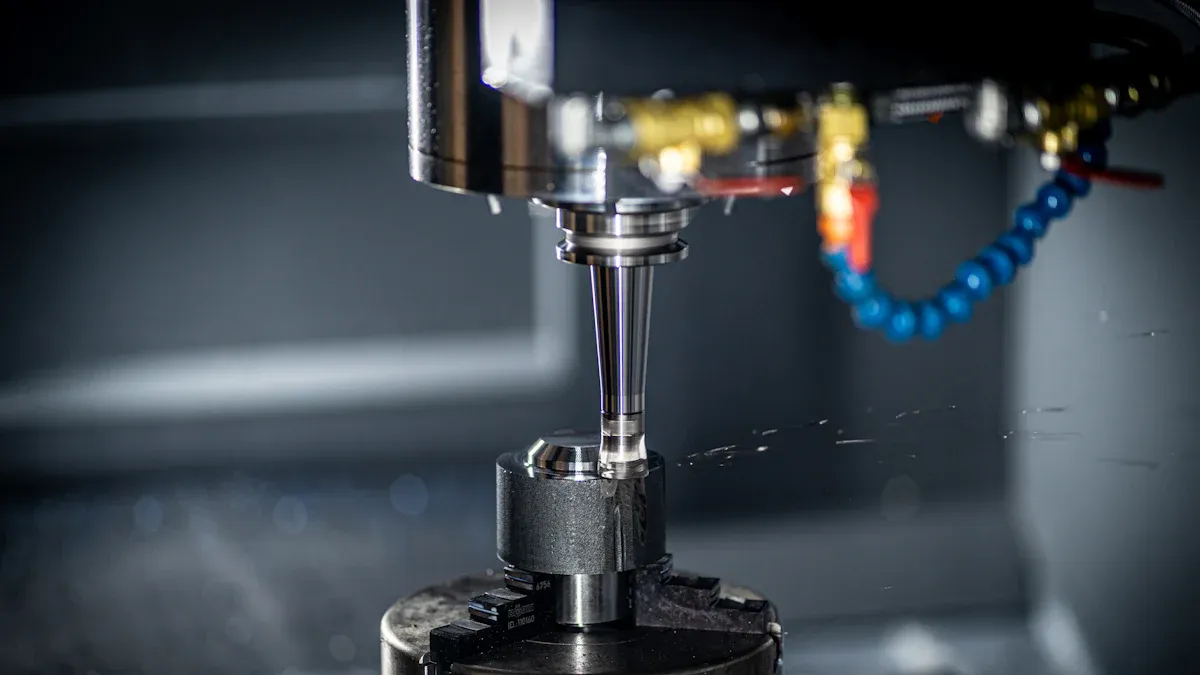
You want parts that fit together just right. Tight tolerance machining makes parts very exact. This means even small mistakes do not happen. Today, factories need every part to be the same and correct. Advanced CNC machines use computers to move tools very carefully. The table below shows how these machines help you make very exact parts:
| CNC Machine Feature | How It Helps You Achieve Tight Tolerances |
|---|---|
| Automated tool paths | Makes hard shapes with very tiny accuracy |
| Real-time feedback | Keeps errors very small, only a few microns |
| Advanced software | Makes sure sizes are always very exact |
| High-precision cutting | Makes sure parts work their best |
You can use cnc machining to meet hard rules and feel sure about it.
Tight tolerance machining makes sure parts fit very well. It lowers mistakes to very small amounts, like microns.
You must keep CNC machines clean and checked often. This helps get very exact and steady results.
Picking the right materials, like titanium or stainless steel, helps keep tight tolerances when machining.
The operator’s skill and training are very important. They help set up machines right and stop expensive errors.
Controlling the shop’s temperature and humidity is very important. This stops machined parts from changing size.
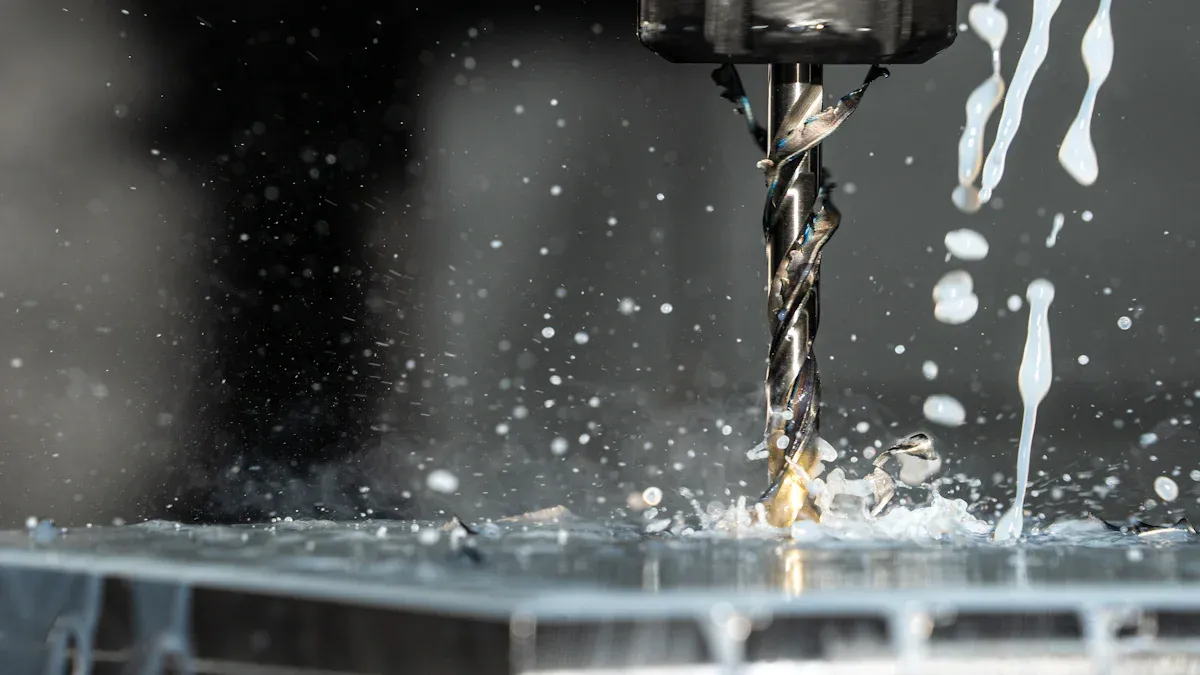
Tight tolerance machining is used in factories. It means making parts with almost no mistakes. Tolerance is how much a part’s size can change and still work. In tight-tolerance cnc machining, you check these changes in tiny amounts. Sometimes, you use thousandths of an inch or microns. This is needed when parts must fit together just right.
Tight tolerances in cnc machining help you make very exact parts.
Tolerance tells you how much a part can be different and still work.
You measure tolerances in very small numbers, like 0.001 inches or less.
Here is a table that shows common tolerance ranges for metals and plastics:
| Material | Standard Tolerance | Tighter Tolerance |
|---|---|---|
| Metals | +/- .005” | < +/- .002” |
| Plastics | +/- .010” | < +/- .002” |
If you want parts to fit together with no gaps, you need tight tolerance machining. This way, every piece matches the design very closely.
Precision is important in cnc machining. It helps your parts work the right way. Using tight tolerances makes sure each part fits and does its job. This is very important for things like airplanes and medical tools.
Tip: Even small mistakes in tight-tolerance cnc machining can cause big problems for safety or how things work.
Here is a table that explains why precision is important:
| Key Points | Description |
|---|---|
| Tight Tolerances | You meet exact rules, which is needed for safety and how things work. |
| Enhanced Durability | Parts that fit better last longer and break less. |
| Cost-Effectiveness | You waste less material, so you save money and help the environment. |
You can see this in real life. Airplane engines need tight tolerances to run safely. Medical devices often need tolerances as small as ±0.0002 inches. If you make a mistake, the device might not work or could hurt someone. Tight tolerance machining helps you make hard parts that meet strict rules.
You want your CNC machine to make parts that match your design every time. Accuracy means your machine cuts each part as close as possible to the true size. Repeatability in dimensions means your machine can make the same part over and over with almost no difference. This is very important for tight tolerance machining.
Taiz leads the way in precision engineering. Their machines use advanced controls to help you reach the highest standards in cnc machining. You can trust Taiz to deliver machines that keep tolerances tight and parts consistent.
Here are the most important factors to consider when you choose a CNC machine for tight tolerances:
The material you pick changes how well tolerances hold. Some materials move more than others when cut.
Your machine needs to be strong and taken care of. This helps you get high precision.
Good programming and toolpath planning help you avoid mistakes. Skilled programmers make sure the machine follows the best path.
Checking your work and using quality checks keeps tolerances tight.
High accuracy helps you follow design rules in many industries. This includes aerospace, medical, and automotive. You want your parts to fit together and work safely. Good repeatability is needed for quality control in big production runs. If your machine cannot repeat the same result, you get more rejects and waste. When your machine repeats the same motion, every part looks and works the same. This is crucial for assembly and reliability.
Tight tolerance CNC machining can reach tolerances as precise as ±0.0025 mm (±0.0001"). Standard machining only gets to ±0.127 mm (±0.005"). You see the difference in how parts fit and perform.
Industry benchmarks show that accuracy is how close your part is to the true value. Repeatability means your machine can make the same part again and again. Tool selection, programming, part design, and environmental conditions all affect accuracy and repeatability.
You can look at dynamic accuracy and repeatability. This means your machine can follow the right path and repeat motions even when working hard. Static accuracy and repeatability are measured when the machine is not cutting.
Taiz machines use special technologies to help you reach these goals. The M800, M80, C80, and E80 series have features that help operators and improve cutting. Here is a table that shows some of these features:
| Feature | Description |
|---|---|
| CNC-dedicated CPU | Handles complex machining and high throughput |
| USB and SD card expansion | Stores and runs large, detailed programs easily |
| Solid state hard drive | Gives you fast, reliable operation and less downtime |
| Large capacitive touch screen | Makes operation simple and intuitive |
| Compatibility | Connects with many networks like CC-Link, PROFIBUS DP, Ethernet/IP |
| Application Suitability | Works well for medical, aerospace, oil/energy, and automotive parts |
You can use these technologies to make your work easier and more precise.
You need to keep your CNC machine in top shape to hold tight tolerances. Regular maintenance helps your machine run smoothly and keeps output quality high. A well-maintained machine can reach tolerances as tight as 0.0001 inches. This is critical in modern manufacturing.
Preventative maintenance stops breakdowns before they happen. You save time and money, and you keep your parts accurate. You should check and calibrate your machine often. This reduces part-to-part variation and keeps your tolerances tight.
A good maintenance schedule is not optional. You need to check your machine’s geometric accuracy and calibrate it regularly. This makes sure your machine works within the right limits. Many experts recommend a quarterly calibration cycle with daily checks. This system helps you master tight tolerance machining.
You can also use productivity tools to help with maintenance and precision. Integrating CAD and CAM software lets you change designs easily and reduces manual errors. Cloud-based CAM solutions help your team work together and make better decisions. Automating routine programming tasks frees you to focus on precision work. In-machine probing and inspection systems catch problems early and reduce scrap. Simulations help you optimize cutting parameters and keep quality high.
Tip: If you keep your machine clean, calibrated, and well-maintained, you can achieve the best tolerances and make parts that always fit and work right.
You need good cutting tools for tight tolerance machining. High-quality tools help you make parts the right size. Bad tools will not let you reach the tolerances you need. Sharp tools cut well and keep your machine safe. Dull tools can hurt your equipment and mess up your work.
Here are some reasons why good tools are important:
Precise tools help you get tight tolerances each time.
Sharp edges give smooth finishes and correct shapes.
Good tools last longer and save you money over time.
Tip: Always look at your tools before you start. Change any tool that looks old or dull. This easy step helps you stop mistakes and keeps your cnc machining working well.
You must calibrate your tools to keep tolerances tight. Calibration means checking and fixing your machine so it works right. Follow these steps to keep your tools and machine accurate:
Get the right tools, like a machinist’s level, dial indicators, and laser interferometers.
Make sure the machine base is level in both ways.
Check and line up each axis by measuring how far they move.
Square the X and Y axes with mounting bolts and a dial indicator.
Shim the backbone carriage to fix Z-Y and Z-X alignment.
Measure the spindle’s distance from the workpiece to check alignment.
Test the tool changer to see if it works smoothly.
Look at the cutting tool to make sure it is sharp and good.
Run a sample program to see if the machine meets your tolerances.
You should do these steps often. Regular calibration helps your cnc machining stay reliable. When you follow these steps, you can trust your machine to make parts that meet strict tolerances.
| Calibration Step | Why It Matters |
|---|---|
| Leveling the base | Keeps the machine steady |
| Axis alignment | Makes movement accurate |
| Spindle alignment | Stops cutting mistakes |
| Tool inspection | Keeps cutting working well |
Note: Careful calibration and good tools work together. They help you reach the tolerances needed for advanced projects.
You need to know how materials act when making precise parts. Some materials help you keep tight tolerances better. Picking the right one makes your work easier and more exact.
Hardness changes how long your tools last. Harder materials can make tools wear out faster.
Thermal stability means how much a material changes when hot. Stable materials keep their shape during cutting.
Ductility shows how much a material bends before breaking. If a material bends too much, it is hard to keep tight sizes.
Machinability is how easy it is to cut the material. Good machinability helps you get smooth finishes and exact shapes.
Mechanical properties like strength and hardness matter. They decide if the part stays strong and keeps its shape.
Part complexity is important too. Some materials can warp or get burrs on tricky shapes.
Tip: Always check the material’s properties before you start. This helps you pick the best one for your project.
Some materials are better for tight tolerance cnc machining. You want materials that stay strong and do not change shape easily. The table below shows some of the best choices:
| Material | Properties |
|---|---|
| Titanium Alloys | High tensile strength, heat resistance |
| Inconel | Corrosion resistance, extreme durability |
| Stainless Steel | Heat and wear resistance |
| Carbon Steel | Good machinability, wear resistance |
You can use these materials to make parts that fit together well. They help you keep your sizes exact, even when the job is tough. When you pick the right material, it is easier to reach tight tolerances for high-precision parts.
You must watch temperature and humidity in your CNC shop. Even small temperature changes can cause big problems. For example, a ten-inch aluminum piece can get longer or shorter. This happens if the temperature goes up or down by ten degrees. The change is as thick as two sheets of paper. Your parts might not fit right if this happens.
Humidity can also cause trouble. High humidity can mess up your measurements. This is a bigger problem when you use laser tools. Wet air can make your machines less exact. You might see mistakes in your finished parts if humidity is not steady.
Temperature changes can make your CNC machine parts move. The spindle and ball screws can get bigger or smaller. This can make your parts the wrong size. You want your shop to stay the same temperature and humidity. Keeping things steady helps your parts come out right.
Here are some things to remember:
Parts can get bigger or smaller if temperature changes.
Humidity can mess up measuring tools and lasers.
A steady shop climate helps you waste less and keeps machines working.
You can use good habits to control your shop’s climate. Start with climate control systems. Air conditioning and dehumidifiers help keep things steady. You should use sensors to watch your shop. Sensors tell you if something changes.
Keep your machines dry and clean. Water can cause rust and break your machines. Check your machines often for rust or damage. Store your materials where the climate is controlled. This stops them from changing size or shape before you use them.
Try these tips to keep your shop working well:
Put in temperature and humidity sensors.
Use air conditioning and dehumidifiers.
Clean machines and work areas every day.
Store materials in places with steady climate.
Look for rust and damage often.
Tip: A shop with good climate control helps you make perfect parts. You save money and waste less when your shop stays steady.
You are very important for making precise parts with CNC machining. Your skills decide how exact your parts will be. If you know about tolerances, you can read drawings and see what the part needs. You pick the best way to machine each part. This helps you get the right accuracy. If something changes while you work, you know how to fix it. You keep everything inside the needed limits.
Skilled machinists help keep tolerances tight in many ways:
You read tolerances and make sure every step matches the plan.
You pick the best machining method to get better accuracy.
You change settings during machining to meet strict rules.
Mistakes by the operator can cause big problems. If you set up the machine wrong, parts may not line up. Bad workholding can make surfaces rough and parts not fit. Custom fixtures can also cause mistakes if they do not hold the part well. These errors can ruin the final product when tight tolerances are needed.
Tip: Always check your setup and workholding before you start. Paying close attention helps you avoid costly mistakes.
You need good training to get the same results every time. Training teaches you how to use the machine and tools the right way. You learn to warm up the machine for 10-15 minutes. This stops heat from changing accuracy. You find out what your cutting tools can do and what they cannot do. This helps you make smart choices. Regular calibration keeps your machine working well for every job.
Good training programs include:
Warming up the machine before you start.
Learning what cutting tools can and cannot do.
Calibrating the machine for each job.
Changing machining settings for different materials.
Using high-quality CNC machines for better results.
Training helps you build good habits. You learn to check every detail and follow the best steps. This helps you make parts that meet tight tolerances every time. Training gives you confidence and helps you do better work.
Note: Spending time on your skills and training is worth it. You make fewer mistakes and your parts turn out better.
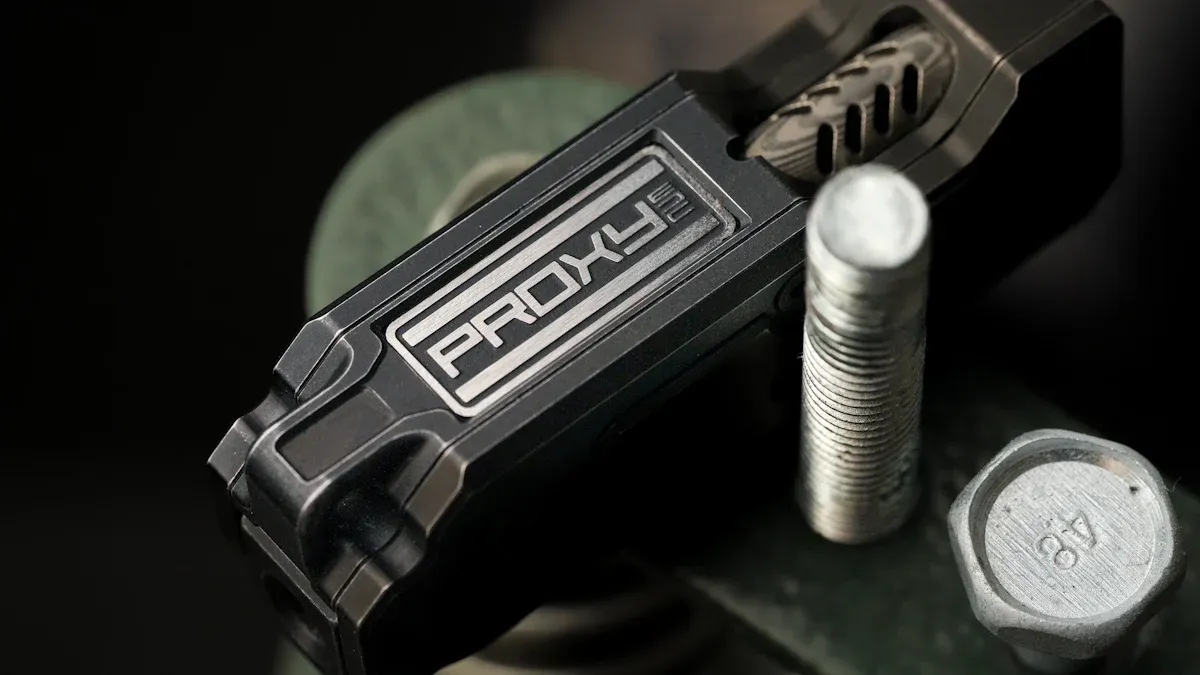
You need special tools to check CNC parts. These tools help you see if parts are the right size. Quality control means you measure parts very carefully. Each tool checks a different part of your piece. Surface plates help you see if something is flat or tall enough. Go/No-Go gages show if a part fits inside the limits. Calipers and micrometers measure how thick or wide something is. Air gages use air to check sizes very closely.
Here is a table that shows common measurement tools and what they do:
| Tool | Description |
|---|---|
| Surface Plate | A flat surface used as a reference point for vertical measurements, ideally made of granite for stability. |
| Go/No-Go Gage | Measures parts to ensure they are within specified tolerances, indicating acceptable limits. |
| Calipers | Versatile tools for measuring distances, available in various shapes and sizes. |
| Micrometer | Uses a calibrated screw for precise measurements, suitable for small dimensions. |
| Air Gage | Employs pressurized air to measure dimensions, known for high precision in machine shops. |
Dimensional inspection checks important sizes on your part. Calipers and micrometers help you do this fast. For tricky shapes, coordinate measurement gives you 3D data. This lets you match your part to the CAD model.
Quality control needs good ways to check parts. You use tight tolerance gauging in places like airplane and medical factories. Small mistakes can make things unsafe. The right inspection helps you follow tough rules.
You can pick from many tools for checking parts. Coordinate measuring machines measure hard shapes very exactly. Digital micrometers and calipers give quick checks for size. Bore gauges and Go/No-Go gauges check holes and if things fit. Height gauges and surface plates measure how tall or flat something is. Optical comparators show the edges and angles of a part. Laser and vision systems check tiny or bendy parts without touching them. Surface roughness testers see if the finish is smooth enough.
Here is a list of common inspection tools:
Micrometers for outside, inside, and depth checks.
Bore gauges for inside diameters.
Air gauges for close checks.
Coordinate measuring machines for hard shapes.
Optical comparators for edge checks.
Laser scanning systems for surface data.
Pin gauges and ring gauges for go/no-go checks.
You use these ways to make sure every part matches the plan. Quality control helps you find mistakes early and keep your work steady.
Making parts with tight tolerances costs more money. If you want precision at ±0.001 inches, the price can be two to four times higher. Ultra-tight tolerances like ±0.0001 inches can make costs go up to twenty-four times more than normal. The main reasons for higher costs are:
Machining takes longer.
You need special equipment.
Inspections must be done more often.
Setups are harder and take more time.
More scrap parts are made.
You can save money by using tight tolerances only on important features. Try not to use deep or tricky shapes if you do not need them. Pick standard tools and materials to keep things simple. When you make your design easier, machining gets faster and you waste less. Put tight tolerances only where they help with safety or how the part works.
Tip: Always ask if each tolerance is needed. This helps you spend less and work faster.
Tight tolerances can cause problems in your work. You might see parts that are not always the same, tools wearing out, machines getting too hot, things not lining up, or materials changing shape. You can fix these problems by doing a few things:
Pick good tools and use them the right way.
Keep your shop at the right temperature and humidity.
Teach workers how to set up and solve problems.
Here is a table that shows common mistakes that affect tolerances:
| Source of Error | Description |
|---|---|
| Measurement error | Different tools give different confidence levels. |
| Tool wear | Worn tools cause undersized parts and rough finishes. |
| Vibration | Chatter affects surface finish and dimensions. |
| Thermal expansion | Heat changes part size, especially in plastics. |
| Fixturing error | Poor fixtures lead to positional mistakes. |
You can get better results by checking your tools often, keeping machines clean, and using strong fixtures. When you know about these problems, you can make smart choices and keep your tolerances tight.
You can get tight tolerance machining if you follow some main steps. First, pick a strong and steady place to work. Next, keep your shop at the right temperature. Use good CNC machines that work well. Make sure tool holders are balanced. Pick cutting tools that are sharp. Work with material suppliers you trust. Check your parts on the machine as you go. Skilled operators are also important for good results.
Good machines and smart operators help you make parts that are always right. New technology like CAD/CAM, multi-axis CNC, and digital checks help you get better all the time.
| Technology | Benefit |
|---|---|
| CAD/CAM Integration | Makes setups faster and more exact |
| Multi-Axis CNC | Makes the same part in one setup |
| Digital Quality Control | Gives you data right away for better work |
You can look at brands like Taiz if you want cnc machining that is always precise and steady.
"Tight tolerance" means a part must be very close to the design. The allowed difference is tiny, usually less than 0.002 inches. This makes sure your parts fit and work as they should.
You keep machines accurate by cleaning them a lot. You check if things line up right. You calibrate tools to make sure they work well. Regular care stops mistakes. Sensors and software help you find problems early.
Titanium, stainless steel, and carbon steel work best. These materials are strong and do not change shape much. They help you make parts that are very exact.
Temperature changes can make parts bigger or smaller. You keep the shop at the same temperature. This helps parts stay the right size. A steady climate stops mistakes and waste.


