CNC Lathe machines are computer-controlled turning systems designed for high-precision, high-efficiency metal machining. By using programmed instructions (G-code) to control spindle rotation and tool movement, CNC lathes deliver consistent accuracy, repeatability, and productivity across single-part and mass-production environments.
Compared with conventional manual lathes, CNC Lathe machines offer superior automation, tighter tolerances, and the ability to machine complex geometries. They have become essential equipment in modern manufacturing industries such as automotive, aerospace, industrial machinery, and precision metal components.
A CNC Lathe operates by rotating the workpiece on a high-precision spindle while cutting tools remove material along programmed paths. The CNC control system precisely manages axis movement, cutting speed, feed rate, and tool positioning to achieve accurate and repeatable results.
Typical machining operations include:
Turning and facing
Drilling and boring
Thread cutting
Grooving and parting
Milling operations (on advanced turn-mill machines)
Key structural components of a CNC Lathe include the spindle system, chuck, tool turret or gang tooling plate, linear guideways, servo drives, and CNC controller (such as FANUC or Siemens). Together, these components ensure stability, accuracy, and long-term machining reliability.
Our CNC Lathe category includes multiple machine configurations to match different production requirements:
Turn-Mill Lathe Machines combine CNC turning and milling functions in one setup. With live tooling and multi-axis control, these machines allow complex parts to be completed in a single clamping, improving accuracy and reducing production time.
Ideal for: complex geometry parts, multi-process machining, high-precision manufacturing.
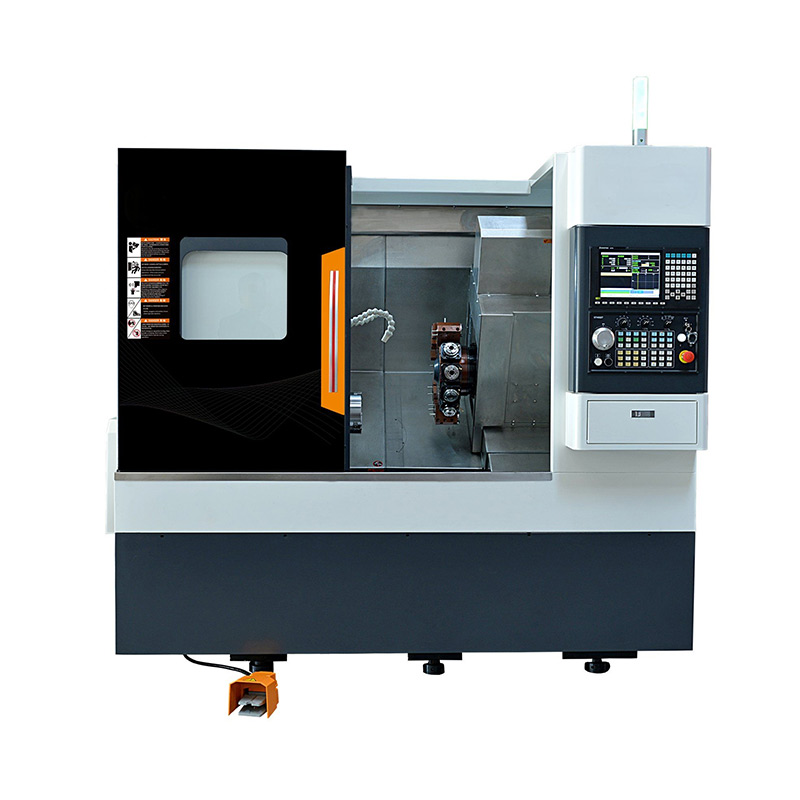
A Gang Tool Lathe uses a fixed tooling plate instead of a rotating turret, allowing extremely fast tool changes and short cycle times. This design is well suited for high-speed production of small to medium-sized precision parts.
Ideal for: high-volume production, short cycle times, simple to medium-complex parts.

A Turning Center Lathe is a highly automated CNC lathe equipped with a tool turret, optional live tooling, and sub-spindle. It provides flexible machining capability and supports complex turning operations with minimal manual intervention.
Ideal for: flexible production, medium to large batch sizes, automated CNC turning.
Turret Lathes feature an indexed tool turret that holds multiple cutting tools, enabling sequential machining without manual tool changes. They are widely used in repetitive and precision turning applications.
Ideal for: stable production, repetitive machining, consistent quality output.
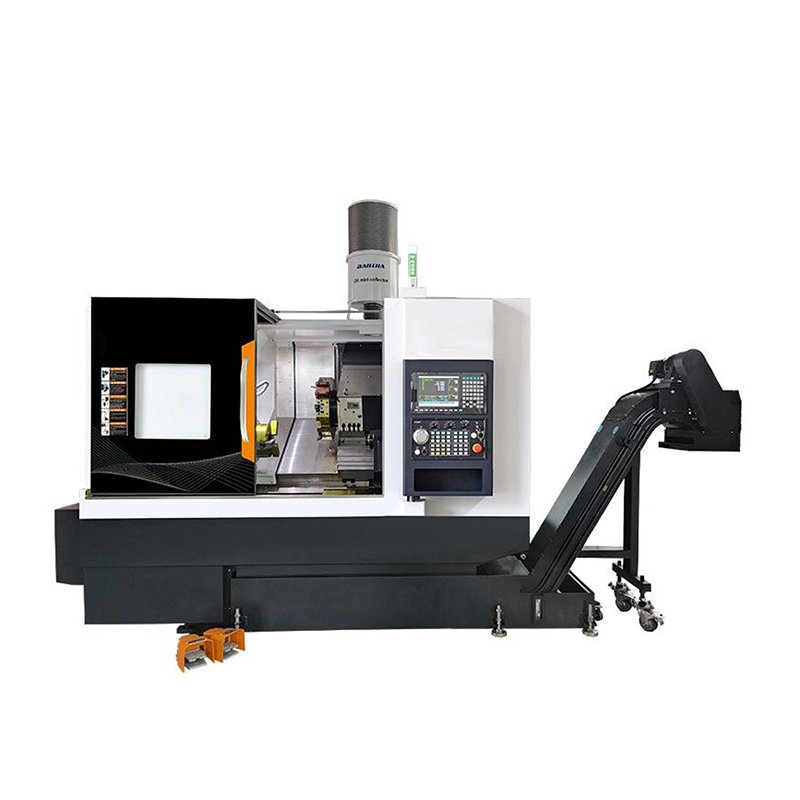
CNC Lathe machines offer significant advantages over traditional turning equipment:
High precision and repeatability for tight-tolerance components
Automated machining reduces labor cost and human error
Improved production efficiency and shorter lead times
Capability to machine complex shapes and profiles
Wide material compatibility, including steel, aluminum, brass, and alloys
These benefits make CNC lathes a core solution for manufacturers seeking higher productivity and consistent quality.
To help customers quickly understand the technical capabilities of different CNC Lathe machines, the following overview highlights the most important performance parameters commonly used when selecting a CNC turning solution. Detailed specifications are available on each product page.
| Specification Item | Description |
|---|---|
| Maximum Turning Length | Defines the maximum length of workpieces that can be machined, suitable for shaft and cylindrical parts. |
| Maximum Swing Diameter | Indicates the largest workpiece diameter that can rotate over the bed or carriage. |
| Spindle Speed Range | High-speed spindle options support efficient machining of various metal materials. |
| CNC Control System | Compatible with industry-standard controllers such as FANUC, Siemens, or equivalent systems. |
| Number of Controlled Axes | Available in 2-axis, multi-axis, and turn-mill configurations for complex machining tasks. |
| Tool System Type | Gang tooling, turret tooling, or live tooling depending on machine configuration. |
| Automatic Tool Capacity | Tool turret or tool station quantity designed to support continuous and automated production. |
| Applicable Materials | Steel, aluminum, brass, stainless steel, and other metal alloys. |
Understanding CNC Lathe specifications helps manufacturers match the right machine to their production needs:
Turning length and swing diameter determine part size capability
Control system type affects programming flexibility and operator familiarity
Axis configuration defines machining complexity and automation level
Tool capacity and tooling system directly impact cycle time and productivity
By comparing these key parameters at the category level, users can quickly narrow down the most suitable Turn-Mill Lathe, Gang Tool Lathe, Turning Center, or Turret Lathe before reviewing detailed product specifications.
Our CNC Lathe machines are engineered for stable and precise machining across a wide range of metal materials, supporting both high-volume production and high-precision custom parts.
| Material Category | Material Type | CNC Lathe Machining Characteristics |
|---|---|---|
| Steel | Carbon Steel | Strong rigidity and spindle torque support stable turning and threading operations. |
| Alloy Steel | Suitable for high-strength components requiring precise cutting and surface finish. | |
| Stainless Steel | Excellent performance with rigid structure and controlled cutting speeds to reduce tool wear. | |
| Aluminum Alloy | Aluminum Alloys | High-speed spindle and fast tool changes enable efficient machining and smooth surface finish. |
| Copper-Based Metals | Copper | Precise feed control ensures clean cuts and dimensional accuracy. |
| Brass | Ideal for high-speed CNC turning with excellent surface quality. | |
| Titanium Alloy | Titanium Alloys | High-rigidity CNC Lathe structure supports stable machining of hard-to-cut materials with controlled heat generation. |
Thanks to high-rigidity machine beds, powerful spindle systems, and advanced CNC control technology, our CNC Lathe machines maintain consistent accuracy, surface quality, and tool life across different metal materials.
Whether machining carbon steel, stainless steel, aluminum alloy, brass, copper, or titanium alloy, our CNC Lathe solutions provide reliable performance for demanding industrial applications.
Our CNC Lathe machines are engineered to balance precision, stability, and efficiency, supporting both high-volume production and complex custom machining. Whether you require high-speed turning, multi-process machining, or automated production capability, our CNC Lathe solutions provide scalable options across multiple industries.
CNC Lathe machines are widely used across multiple industries, including:
Automotive parts such as shafts, bushings, and fittings
Aerospace precision components
Industrial machinery and equipment
Hydraulic and pneumatic parts
Medical and electronic metal components
Their flexibility and machining accuracy allow CNC lathes to support both standard production and customized manufacturing needs.
Selecting the right CNC Lathe machine is a critical decision that directly affects machining accuracy, production efficiency, and long-term operating cost. The ideal CNC Lathe depends on several technical and production-related factors, including material type, part complexity, precision requirements, and production volume.
Below are the key considerations to help you choose the most suitable CNC Lathe solution for your application.
✅️ Materials to Be Machined
Different materials require different spindle power, cutting speeds, and machine rigidity.
Steel & Stainless Steel – Require high rigidity, strong spindle torque, and stable cutting performance
Aluminum & Non-Ferrous Metals – Benefit from high spindle speed and fast tool changes
Brass & Copper Alloys – Require precise control and smooth surface finishing
Plastics & Engineering Polymers – Need high RPM, low cutting force, and accurate tool paths
Choosing a CNC Lathe designed for your primary material improves tool life and machining quality.
✅️ Part Size & Geometry
Determine the maximum workpiece dimensions before selecting a machine:
Maximum swing diameter over bed or carriage
Maximum turning length for shaft or tubular parts
Part complexity (simple cylindrical vs. complex profiles)
This ensures the CNC Lathe can accommodate your largest parts without compromise.
✅️ Precision & Tolerance Requirements
If your parts require tight tolerances or superior surface finishes, consider:
Machine structural rigidity
Precision linear guideways or box ways
High-quality servo motors and feedback systems
High-precision CNC Lathes are essential for aerospace, medical, and precision industrial components.
✅️ Production Volume
Production volume influences automation level and machine configuration:
Low volume / custom parts – Flexible Turning Centers
Medium batch production – Turret Lathes with automatic tool change
High-volume production – Gang Tool Lathes or automated Turn-Mill machines
Higher production volumes benefit from faster cycle times and automated machining processes.
✅️ Spindle Power & Speed (RPM)
Spindle performance directly impacts cutting efficiency and material removal rate:
High torque for heavy cutting and steel machining
High RPM for aluminum, brass, and precision parts
Variable spindle speed for multi-material applications
✅️ CNC Control System
The control system determines programming efficiency and operational ease.
Industry-standard systems such as FANUC and Siemens offer stability, flexibility, and global support
User-friendly interfaces reduce training time and programming errors
✅️ Tool System & Tool Capacity
Tooling configuration affects machining flexibility and productivity:
Gang tooling for fast tool changes and short cycle times
Turret tooling for multi-process machining
Live tooling for drilling, milling, and tapping operations
Adequate tool capacity supports continuous, automated production.
✅️ Number of Controlled Axes
Axis configuration defines machining complexity:
2-axis CNC Lathes for basic turning
Multi-axis and turn-mill CNC Lathes for complex part geometries
Sub-spindle configurations for complete machining in one setup
✅️ Machine Footprint & Installation Space
Ensure the CNC Lathe fits your workshop layout, including space for:
Operator access
Material loading and unloading
Maintenance and service
Compact CNC Lathes are ideal for space-limited workshops, while larger turning centers suit industrial production floors.
✅️ Automation & Future Expansion
If future scalability is important, consider:
Bar feeders or robotic loading
Automatic tool measurement systems
Integration with automated production lines
These features help reduce labor costs and increase long-term productivity.
Turn-Mill Lathe Machines – Best for complex parts requiring both turning and milling
Gang Tool Lathes – Ideal for high-speed, high-volume production of small parts
Turning Center Lathes – Suitable for flexible and automated machining
Turret Lathes – Reliable choice for repetitive and precision turning tasks
Choosing the right CNC Lathe solution means balancing technical performance, production efficiency, and long-term reliability. By carefully evaluating material type, part size, precision requirements, machine specifications, and workshop conditions, manufacturers can select a CNC Lathe that delivers consistent quality and sustainable productivity.
A CNC lathe is a computer-controlled machine tool used to remove material from a rotating workpiece to create precise cylindrical or complex-shaped parts. CNC lathes use programmed instructions (G-code) to control spindle rotation, cutting speed, feed rate, and tool movement, allowing for highly accurate, repeatable, and automated machining processes.
CNC lathe machining is not difficult to start, but mastering it takes time. Beginners can learn basic machine operation and part setup within a few weeks, while advanced programming, precision control, and complex machining techniques typically require several months to years of hands-on experience.
A CNC lathe machinist sets up machines, loads materials, selects cutting tools, runs CNC programs, monitors machining processes, and inspects finished parts. Machinists ensure dimensional accuracy, surface quality, and efficient production while maintaining machine performance and safety.
Yes, many CNC machinists work successfully without a college degree. Most skills are gained through vocational training, apprenticeships, or on-the-job experience. Practical machining knowledge, programming ability, and hands-on experience are often more important than formal education.
Most materials can be CNC machined, but some are extremely difficult or impractical, such as:
Very soft rubbers or foams
Brittle materials like certain ceramics or glass
Materials that deform easily under cutting force
Modern CNC lathes can machine a wide range of metals including steel, aluminum, brass, copper, and titanium alloys.
The average lifespan of a CNC lathe machine is 15 to 25 years, depending on build quality, usage intensity, maintenance practices, and operating conditions. With proper maintenance and periodic upgrades, high-quality CNC lathes can operate reliably for decades.
Basic CNC machine operation can be learned in 1–3 months, while becoming a skilled CNC machinist typically takes 1–3 years of continuous practice, depending on machine complexity and production requirements.
In most regions, no formal license is required to operate a CNC lathe. However, employers usually require proper training, safety certification, and demonstrated machining competence before allowing independent machine operation.
CNC lathe tool lifespan depends on cutting material, speed, and conditions. Cutting tools may last from several hours to several weeks of machining time. Proper tooling selection and optimized cutting parameters significantly extend tool life.
Choosing the right CNC Lathe machine requires more than comparing specifications. Material type, part complexity, production volume, and precision requirements all play a critical role in selecting the most efficient and cost-effective solution.
Our technical team is ready to help you evaluate your machining needs and recommend the most suitable CNC Lathe, Turning Center, Gang Tool Lathe, Turret Lathe, or Turn-Mill solution for your application. Whether you are planning a new production line or upgrading existing equipment, we provide professional guidance, technical support, and customized CNC turning solutions.
Contact us today to discuss your project requirements, request technical details, or receive a tailored CNC Lathe recommendation. Our specialists will respond promptly to support your production goals.
E-mail: vicky@cnctaiz.com


