
Views: 0 Author: Site Editor Publish Time: 2026-08-07 Origin: Site
Have you ever wondered how precision parts are made? CNC turning is a fascinating process that transforms raw materials into intricate components. In this guide, we’ll explore what CNC turning is, its significance in manufacturing, and provide an overview of the entire process. Get ready to dive into the world of CNC turning!
CNC turning is a systematic process that transforms raw material into precision-engineered components. Here’s a breakdown of the steps involved:
Designing the Part: It starts with creating a detailed design using Computer-Aided Design (CAD) software. This design outlines the exact specifications of the part you wish to produce.
Converting to CNC Code: The CAD design is then translated into a CNC-compatible language, often G-code. This code instructs the CNC lathe on how to execute the machining process.
Preparing the Machine: Before machining, the operator selects the appropriate raw material, typically a metal or plastic bar. The CNC lathe is set up with the necessary cutting tools tailored for the specific operations required.
The Turning Process: The workpiece is mounted on a spindle and rotates at high speed. The cutting tool, which remains stationary, moves into the rotating material, gradually removing layers until the desired shape is achieved.
Finishing Touches: After the turning process, the component undergoes quality checks to ensure it meets the specified dimensions and surface finish. Additional processes like polishing or threading may be applied, depending on the application.
Computer-Aided Design (CAD) plays a pivotal role in CNC turning. It allows engineers and designers to create precise models of parts before production begins. Here’s how CAD influences the CNC turning process:
Precision Design: CAD enables the creation of highly detailed and accurate designs, ensuring that the final product meets exact specifications.
Streamlined Workflow: By converting designs into CNC code, CAD software facilitates a seamless transition from design to manufacturing, minimizing the risk of errors.
Simulation: CAD software often includes simulation features, allowing operators to visualize the machining process and make adjustments before actual production, enhancing efficiency and reducing waste.
Programming is crucial in CNC turning, as it dictates the machine's movements and operations. Here’s how programming and automation enhance the CNC turning process:
G-Code: The primary programming language used in CNC turning is G-code. This code directs the machine on how to move, which tools to use, and the speed of operations. Mastery of G-code allows for intricate designs and precise machining.
Automation: Modern CNC turning machines are equipped with advanced automation features. This includes automated tool changers and bar feeders, which streamline the production process. Automation reduces manual intervention, leading to faster production times and increased consistency.
Multi-Axis Capabilities: Some CNC turning centers offer multi-axis functionalities, allowing for complex geometries and features to be machined without removing the workpiece. This capability enhances efficiency and versatility in manufacturing.
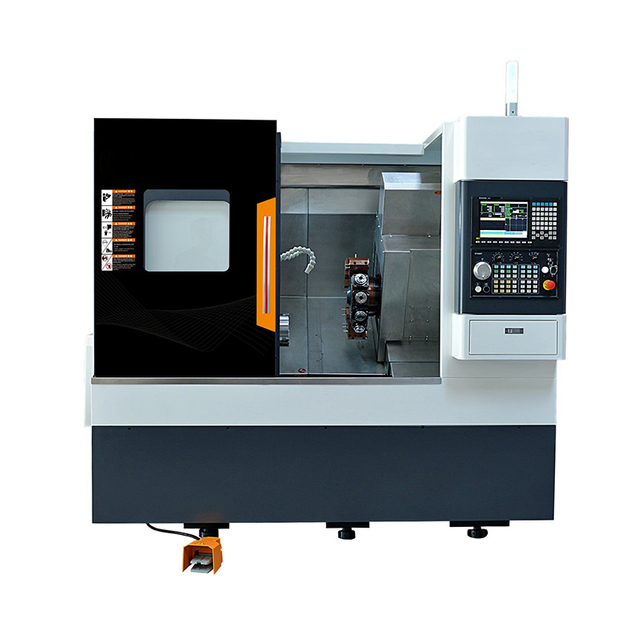
CNC turning encompasses several specialized operations tailored to meet specific design and functional requirements. Each operation has its unique characteristics and applications. Here’s a closer look at the most common types of CNC turning operations:
Straight turning is the most fundamental operation in CNC turning. In this process, the cutting tool moves parallel to the axis of rotation. This action gradually reduces the diameter of the raw material. For instance, if you need to machine a steel rod from 25mm down to 20mm for a hydraulic piston, straight turning is the operation that accomplishes this. It’s straightforward but essential for creating uniform cylindrical parts.
Taper turning is used to create a cone-like shape. Here, the cutting tool approaches the workpiece at an angle, allowing for a gradual change in diameter. This process is commonly seen in components like lathe tailstock centers or machine handles, where a smooth transition from a wider diameter to a narrower one is required. Taper turning is vital for parts that need to fit together seamlessly.
Grooving involves cutting narrow recesses or slots into the material. These grooves serve various purposes, such as allowing snap rings to fit into place or controlling how a part assembles with others. This operation is crucial for parts that require precise fits and functionalities, making it an essential step in many manufacturing processes.
Facing is an operation where the cutting tool moves across the end of the rotating workpiece. This action creates a clean, flat surface, often serving as the final step in preparing a part’s end. For example, squaring off the face of a brass gear is typically achieved through facing. It ensures that the part can properly interface with other components.
Threading is a specialized operation used to carve screw-like features on the inside or outside of a part. This is common in bolts, pipe fittings, and connector housings. CNC lathes excel at creating threads with high precision, meeting standard specifications like UNC, UNF, or metric formats. This operation is critical for ensuring parts can be securely fastened together.
CNC turning is a versatile machining process that can work with a wide range of materials. The choice of material significantly impacts the quality, durability, and functionality of the finished parts. In this section, we’ll explore the common metals and plastics used in CNC turning, as well as the factors influencing material selection.
Aluminum: Lightweight and easy to machine, aluminum is a popular choice for various applications, especially in the aerospace and automotive industries. Its excellent corrosion resistance and good thermal conductivity make it ideal for components that require durability without adding unnecessary weight.
Stainless Steel: Known for its strength and corrosion resistance, stainless steel is often used in medical and food-grade components. It provides the necessary durability for parts that must withstand harsh environments or high wear.
Brass: Brass is favored for its smooth machining properties. It’s commonly used in fittings, connectors, and decorative parts. Its excellent conductivity makes it suitable for electrical applications as well.
Titanium: Renowned for its high strength-to-weight ratio, titanium is often used in aerospace and medical applications. Its resistance to corrosion makes it an excellent choice for components that will be exposed to extreme conditions.
Nylon: This strong and flexible plastic is widely used in various applications, including gears and bearings. Its durability and resistance to abrasion make it a preferred choice for parts that undergo significant wear.
PTFE (Teflon): Known for its heat and chemical resistance, PTFE is ideal for applications where exposure to harsh chemicals or high temperatures is expected. Its low friction properties make it suitable for seals and bearings.
ABS: This plastic is affordable and easy to machine. It is commonly used for prototyping and producing parts that require good impact resistance and surface finish.
When selecting materials for CNC turning, several factors come into play:
Mechanical Properties: The strength, hardness, and flexibility of the material must match the part’s intended application. For example, parts that will be subjected to high stress may require stronger metals like stainless steel or titanium.
Thermal Properties: Consideration of how the material behaves under different temperatures is crucial. For instance, materials like PTFE are preferred in high-temperature applications due to their thermal stability.
Cost: Budget constraints often dictate material selection. While high-performance materials may be ideal, they can also be more expensive. Balancing performance and cost is essential for many projects.
Surface Finish: The desired surface finish can influence material choice. Some materials can achieve a smoother finish more easily than others, which may affect the part's functionality and appearance.
Production Volume: For high-volume production, materials that are easier to machine and cost-effective to source are often favored. This ensures efficiency and consistency across all produced parts.
Understanding the materials used in CNC turning helps manufacturers make informed decisions, ensuring that the final products meet quality standards and performance expectations.
CNC turning offers several significant advantages that make it a preferred choice in modern manufacturing. These benefits stem from its precision, efficiency, and versatility, making it suitable for various applications across multiple industries.
One of the standout features of CNC turning is its ability to produce parts with exceptional precision. The automated nature of CNC machines allows for tolerances within a few microns. This level of accuracy is crucial in industries like aerospace and medical, where even the smallest error can lead to catastrophic failures. CNC turning ensures that each part meets exact specifications consistently, which is vital for maintaining quality standards.
CNC turning machines operate at high speeds, significantly reducing production times. Once a program is set, the machine can produce parts quickly, often utilizing features like bar feeders to automate the loading of raw materials. This automation minimizes downtime and maximizes output, making CNC turning an efficient choice for both small runs and large-scale production.
While the initial setup costs for CNC turning can be higher than traditional methods, the long-term savings are substantial. The efficiency of CNC machines reduces labor costs and material waste, leading to lower per-part costs in medium to high-volume production. This cost-effectiveness makes CNC turning an attractive option for businesses looking to optimize their manufacturing processes.
CNC turning allows for a high degree of design flexibility. Complex shapes, threads, and features can be easily programmed into the machine, enabling the production of intricate components that might be challenging or impossible to achieve manually. This adaptability is especially beneficial for industries requiring custom parts or rapid prototyping, as changes can be made quickly without extensive retooling.
In summary, CNC turning provides manufacturers with precision, speed, cost savings, and design flexibility, making it an essential process in today’s competitive landscape.
CNC turning is a vital process used across various industries, enabling the production of precise, high-quality cylindrical components. Its versatility allows manufacturers to create a wide range of parts, from simple shafts to complex assemblies. Here’s a closer look at the industries that utilize CNC turning, examples of turned parts, and case studies showcasing successful projects.
Automotive: In the automotive sector, CNC turning is essential for producing components like gears, valves, and shafts. These parts require high precision to ensure proper functionality and safety in vehicles.
Aerospace: Aerospace applications demand the utmost precision. CNC turning is used for creating critical components such as turbine blades, couplings, and landing gear parts. The stringent quality standards in this industry make CNC turning invaluable.
Medical: The medical field relies on CNC turning for manufacturing surgical instruments, implants, and housings. These components must meet strict regulatory standards and require high accuracy for patient safety.
Electronics: In electronics, CNC turning is employed to create connectors, enclosures, and other components. The ability to work with non-ferrous metals and maintain tight tolerances is crucial for ensuring performance and reliability.
Military: The military sector uses CNC turning for precision parts needed in weapons systems, vehicles, and communication devices. The durability and accuracy of turned components are critical for mission success.
Shafts: Commonly used in machinery and automotive applications, shafts must be precisely machined to fit into assemblies and transmit power effectively.
Bushings: These cylindrical components provide support and reduce friction between moving parts. They are often used in automotive suspensions and machinery.
Bolts and Nuts: Threaded fasteners are essential in various applications. CNC turning ensures that these parts meet specific standards for strength and durability.
Housings: CNC-turned housings protect sensitive components in electronics and medical devices, ensuring they function correctly and remain safe.
Aerospace Component Production: A leading aerospace manufacturer faced challenges in producing turbine blades with tight tolerances. By integrating CNC turning into their production line, they improved efficiency and reduced scrap rates. The ability to program complex geometries allowed them to meet stringent aerospace standards while minimizing production time.
Medical Device Manufacturing: A medical device company required precision parts for a new surgical instrument. Using CNC turning, they produced components that met the necessary regulatory requirements. The flexibility of CNC technology enabled them to adapt designs quickly, leading to faster time-to-market.
Automotive Parts Supplier: An automotive parts supplier needed to increase production capacity for engine components. By investing in multi-axis CNC turning machines, they enhanced their ability to produce complex parts with high repeatability. This investment resulted in a significant reduction in lead times and improved customer satisfaction.
In conclusion, CNC turning plays a crucial role in various industries, supporting the production of a wide array of components that meet high standards of precision and quality. Its applications are far-reaching, proving essential for manufacturers aiming to deliver reliable products in competitive markets.
CNC turning and CNC milling are both essential machining processes, but they serve different purposes and operate on distinct principles.
Motion Mechanics: In CNC turning, the workpiece rotates while a stationary cutting tool removes material. This setup is ideal for creating symmetrical, cylindrical shapes like shafts and bushings. Conversely, in CNC milling, the cutting tool moves across the stationary workpiece. This allows for the production of more complex geometries, including flat surfaces and intricate designs.
Type of Parts: CNC turning is best suited for parts that require rotational symmetry. Examples include gears, bolts, and pipes. CNC milling excels in creating non-cylindrical shapes, such as brackets, housings, and contours.
Setup and Operation: CNC turning setups tend to be simpler, making them easier to operate for basic cylindrical parts. CNC milling requires more complex setups and programming, especially for intricate designs. This complexity can lead to longer setup times.
CNC turning offers several advantages compared to CNC milling, particularly for specific applications.
Speed and Efficiency: CNC turning can often produce parts faster than milling, especially for high-volume production runs. The continuous rotation of the workpiece allows for quicker material removal, reducing cycle times.
Cost-Effectiveness: Because CNC turning is generally less complex, it can lead to lower operational costs. The simplicity of the setup means less time spent on programming and adjustments, translating to savings in labor and machine time.
Surface Finish: CNC turning typically yields a smoother surface finish on cylindrical parts. The continuous contact between the cutting tool and the rotating workpiece allows for a fine finish, which is often desirable in applications like automotive and aerospace components.
When deciding which process to use, consider the following factors:
Part Design: If your part is predominantly cylindrical, CNC turning is likely the better choice. For more complex shapes, CNC milling is the way to go.
Production Volume: For high-volume production of cylindrical parts, CNC turning offers efficiency and speed. If you need to produce a smaller quantity of complex parts, CNC milling may be more suitable despite longer cycle times.
Material Type: Both processes can work with various materials, but the specific characteristics of the material may influence your choice. For example, softer materials may be easier to turn, while harder materials might require milling.
Budget Constraints: Consider the cost implications of both methods. CNC turning generally has lower initial setup costs, making it a more budget-friendly option for simple cylindrical parts.
In conclusion, both CNC turning and CNC milling have their unique strengths and applications. Understanding the differences and advantages of each process will help you make informed decisions for your manufacturing projects.
CNC turning is a precise machining process that transforms raw materials into high-quality components. It offers numerous benefits, including speed, efficiency, and design flexibility. As industries evolve, CNC turning will remain vital in manufacturing, adapting to new technologies and materials. Explore CNC turning services to enhance your production capabilities. At Taiz, we provide advanced CNC turning solutions that deliver superior quality and value for your projects. Discover how our services can meet your manufacturing needs.
A: CNC Turning is a machining process that uses computer-controlled lathes to create precise cylindrical components from raw materials.
A: CNC Turning works by rotating a workpiece while a stationary cutting tool removes material to achieve the desired shape and dimensions.
A: CNC Turning offers high precision, efficiency, and cost-effectiveness, making it ideal for producing high-quality cylindrical parts.
A: CNC Turning can work with various materials, including metals like aluminum and stainless steel, as well as plastics like nylon and PTFE.
A: CNC Turning is best for cylindrical parts, while CNC Milling excels at creating complex shapes and flat surfaces.


