
Views: 0 Author: Site Editor Publish Time: 2025-12-16 Origin: Site
Choosing the right CNC milling machine means knowing what you need. You should pick a machine that fits your plans. Some people make simple parts. Others work with hard shapes. Advanced CNC machines, like Taiz’s Turn-Mill Lathe Machine, help you work faster. You can use different metals in one setup. This saves time and helps you finish jobs quickly. CNC technology does most jobs by itself. It makes fewer mistakes. It keeps your shop working all day and night. The table below shows how CNC machines help your work:
| Benefit | Impact on Workflow |
|---|---|
| Automation lowers human mistakes | Saves materials and time |
| CNC machining runs automatically | Frees workers for quality |
| Machines operate with little watching | Increases daily output |
This CNC buying guide gives you advice you can trust. It helps you learn about CNC Milling Machines.
Think about what your project needs before you pick a CNC milling machine. Look at the types of materials you will use. Check how hard the parts are to make. Count how many parts you need to make. This helps you choose the right machine.
Pick a CNC machine that fits your job. Some machines work well for making quick samples. Some are better for making a few parts. Others are good for making lots of parts. Choose based on what your job needs.
Learn about the main features of CNC milling machines. Look at how strong the spindle is. Check the size of the table. See how many axes the machine has. These things change how the machine works. They also decide what parts you can make.
Think about how much it costs to own the machine. Add up the cost for fixing and keeping the machine working. Remember the cost for tools too. Taking care of the machine often stops big problems. It helps the machine work well for a long time.
Always try out the software before you buy. Look at the machine in person. This lets you see if it works for you. You can check if it is good quality. You can also see what help you can get for your CNC milling jobs.
Before you pick a CNC milling machine, know your project needs. Every project is different. Some use many materials. Others need machines for tough shapes. Think about what material you will use. Metals, plastics, and composites need special cnc features. Hard metals need strong spindle power.
Part complexity is important. Simple parts need basic cnc machines. Complex parts need multi-axis CNC machines. These machines help you make detailed shapes. You should think about how exact you want your parts. High tolerance and smooth finishes need advanced CNC features.
Production volume matters too. If you make lots of parts, pick a CNC machine that is tough and automatic. For small batches, a simple CNC machine may be enough. Check if the CNC machine works with your control system and software. This helps you work faster and avoid trouble.
Support and maintenance are key. Good service keeps your CNC machine working. Reliable help means less downtime and quick fixes.
Tip: Make a list of your project needs. This helps you compare CNC machines and choose the right one.
Here is a quick summary of common project needs:
Material type
Part complexity
Tolerance and surface finish
Production volume
Control system and software compatibility
Service, maintenance, and support
Match your cnc machine to your job. Different jobs need differentCNC machines. If you make prototypes, pick a cnc machine that makes parts fast. Rapid prototyping with cnc lets you test designs and see how they work. These machines make parts that look like the final product.
For low-volume production, CNC machining saves money. You can make small batches without spending a lot. CNC machines make strong and useful parts. These parts match what you want for your final product.
If you do mass production, pick a CNC machine that is fast and automatic. This helps you make many parts with less work. Choose a CNC machine that fits your work and business plans.
Here are some ways CNC machines fit different jobs:
Rapid prototyping for testing and design
Low-volume production for custom orders
Mass production for large quantities
Making strong and useful parts
Note: Always think about what you may need later. A flexible cnc machine can grow with your business and handle new jobs.
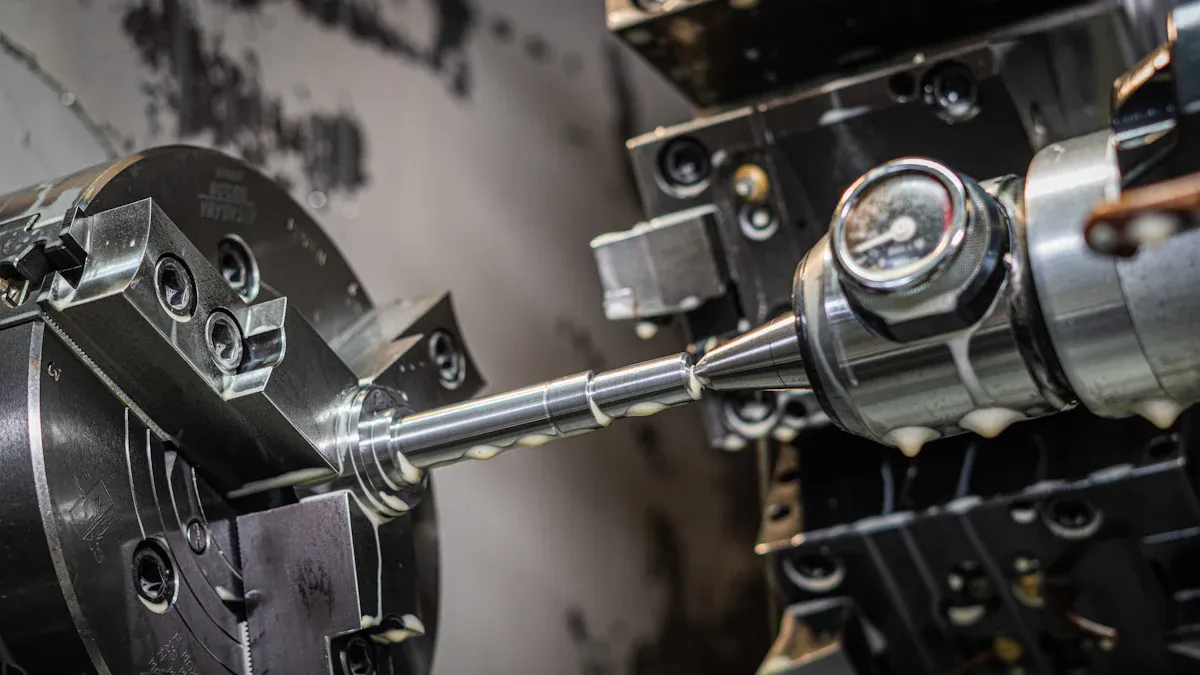
When you look for a CNC mill, you will find many types. Each type fits different jobs and needs. Knowing the main types helps you pick the right CNC for your shop.
You will see two main styles: vertical and horizontal cnc mills. The difference comes from the way the cutting tool sits and moves. In a vertical cnc mill, the tool points down. You get a clear view of your work. This makes it easy to set up and check your parts. Vertical cnc mills work well for small jobs, custom tools, and research.
A horizontal cnc mill has the tool pointing sideways. Chips fall away on their own, so you spend less time cleaning. These machines have more power. You can use them for big jobs and tough materials. Horizontal cnc mills cost more, but they handle high-volume work better.
| Feature/Aspect | Horizontal CNC Mills | Vertical CNC Mills |
|---|---|---|
| Tool Orientation | Sideways | Downward |
| Chip Removal | Chips fall away easily | Chips may need manual removal |
| Power | High, for large jobs | Lower, for small jobs |
| Applications | High volume, tough parts | Custom tools, small applications |
| Cost | Higher | Lower |
| Visibility | Less during machining | More during machining |
Tip: Choose a vertical cnc mill for easy setup and small parts. Pick a horizontal cnc mill for big jobs and faster chip removal.
Turn-mill machines combine turning and milling in one cnc. You can make complex parts in a single setup. This saves time and boosts your shop’s output. Taiz’s Turn-Mill Lathe Machine is a great example of this advanced cnc technology. You can drill, tap, bore, and cut gears all on one cnc mill. These machines let you do turning and milling at the same time, which means you finish jobs faster.
| Operation Type | Description |
|---|---|
| Advanced Drilling | Makes bolt patterns and angled holes |
| Precision Boring | Finishes inside diameters with tight tolerances |
| Complex Contouring | Cuts shapes and profiles using many axes |
| Gear Cutting | Makes gears right on the cnc mill |
| Secondary Operations | Adds knurling and threading with live tools |
| Simultaneous Machining | Turns and mills at the same time |
You can choose between benchtop and industrial cnc mills. Benchtop cnc mills are small. You can use them for hobbies or small projects. They fit on a table and use less power. Industrial cnc mills are big and strong. You use them for car parts, planes, and other tough jobs. They handle heavy work and run all day.
| Feature | Benchtop CNC Milling Machines | Industrial CNC Milling Machines |
|---|---|---|
| Size | Small, fits on a table | Large, for factories |
| Power | Lower spindle power | High power for tough jobs |
| Application | Hobbies, prototypes | Cars, planes, complex parts |
Note: Pick a benchtop cnc mill for learning or small runs. Choose an industrial cnc mill for big jobs and full-time work.
You now know the main types of cnc mills. Each type has a place in the cnc world. Think about your needs and match them to the right cnc mill.
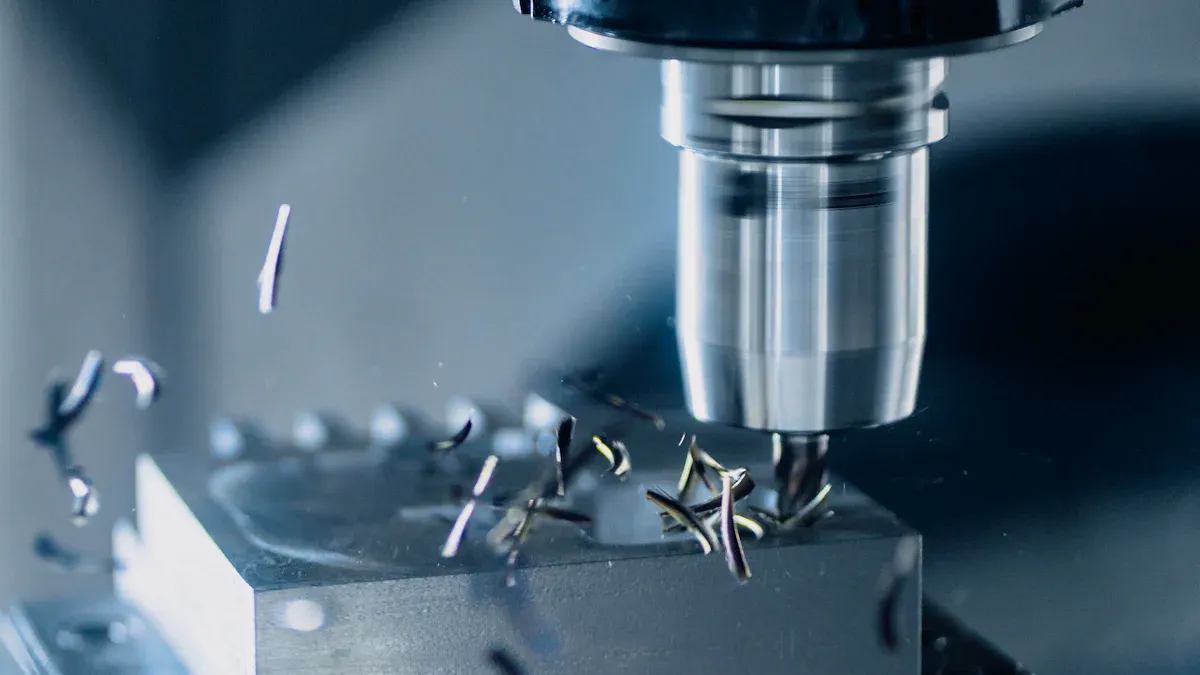
When you pick a cnc milling machine, look at some main features. These features change how well your machine works. They also make it easier or harder to use. The features decide what parts you can make. If you know about these features, you can choose the best cnc for your shop.
The spindle is the most important part of a cnc milling machine. Spindle power and speed tell you how fast you can cut. They also show what materials you can use. Spindle speed is measured in RPM. This tells you how fast the tool spins. The speed changes how the tool cuts the material.
If you use higher spindle speeds, you get a smoother finish. High speeds help stop vibrations and keep the machine cool.
If you go too fast, you can hurt heat-sensitive materials like titanium.
Spindle speed also changes how fast you can cut away material. Faster speeds can help you cut more, but you must use the right feed rate and tool.
Here is a table that shows good spindle speeds for different materials:
| Material | Operation Type | Spindle Speed Range (RPM) | Cutting Speed (SFM) |
|---|---|---|---|
| Aluminum 6061 | Rough Milling | 3,000 - 6,000 | 600 - 800 |
| Aluminum 6061 | Finish Milling | 2,000 - 4,000 | 300 - 500 |
You should always match spindle power and speed to your job. This helps you get good results and keeps your tools working longer.
Tip: Use the right spindle speed to get a better finish and make your cnc work better.
Table size and travel distance tell you how big your parts can be. The table holds your workpiece. Travel distance shows how far the tool or table can move. These two things set the work envelope of your cnc.
| Evidence Description | Key Point |
|---|---|
| The physical dimensions of CNC machines’ work envelopes are the main factor limiting their part size capabilities. | Table size and travel distances define the work envelope, which restricts the maximum size of machined components. |
| The CNC machining work envelope refers to the 3D space within which the machine operates. | Each machine has a unique work envelope that limits the dimensions of the workpieces that can be machined. |
| CNC axis travel is the range over which the cutting tool or workpiece can move along the X, Y, and Z axes. | The axis travel directly affects the maximum size of components that can be machined. |
A bigger work envelope lets you make larger parts or many small parts at once. This saves time and helps you make more things. If your cnc has a small work envelope, you may need to move your part and set it up again. This can cause mistakes.
Note: Always check the table size and travel distance before you buy a cnc. Make sure it fits your biggest part.
Axis capability tells you how many ways your cnc can move. Most basic machines have three axes: X, Y, and Z. Some advanced machines, like 5-axis models, can move in more ways. This lets you make more complex shapes and detailed parts.
With 5-axis cnc, you can reach five sides of a part without moving it.
You get high accuracy for small and tricky parts.
These machines are used in medical, aerospace, and car making.
| Feature | 3-Axis CNC | 5-Axis CNC |
|---|---|---|
| Access to Complex Shapes | Limited | Enhanced access to intricate shapes |
| Machining Angles | Requires repositioning | Simultaneous machining from multiple angles |
| Surface Finish | Standard | Improved surface finishes |
| Cycle Time | Longer for complex parts | Reduced cycle times |
| Dimensional Accuracy | Standard | Maintains accuracy across complex parts |
A 5-axis cnc can follow curves and make smooth surfaces on hard parts. This is important for subtractive manufacturing, where you cut away material to make shapes. You can use these machines for airplane parts, medical implants, and turbine blades.
The control system and cnc software are like the brain of your cnc machine. They decide how easy it is to program and run jobs. Some cnc software is simple and good for easy jobs. Other software is advanced and lets you do 3D and multi-axis work.
Different cnc software has different looks and features. This changes how easy they are to use.
Advanced cnc software can do hard jobs and lets you design and make parts in one place.
CAD/CAM integration helps you go from design to making parts without extra steps.
You should pick a control system and cnc software that matches your skills and jobs. Good software saves you time and helps you make fewer mistakes.
Build quality tells you how long your cnc will last and how accurate it stays. The frame material and how strong the machine is matter a lot.
| Material | Rigidity | Damping Characteristics |
|---|---|---|
| Cast Iron | High | Excellent |
| Epoxy Granite | Moderate | Excellent |
| Aluminum | Moderate | Good |
| Steel | High | Poor |
A strong frame stops vibrations and keeps your cuts accurate. If the frame moves, your parts may not come out right. Good build quality also means your tools last longer and your parts look better.
Weak frames can make tools bend and lower accuracy.
Vibrations can make your parts look bad and wear out tools faster.
Tip: Look for a cnc with a strong frame and good damping to get the best results.
Safety and ergonomics keep you and your team safe and comfortable. Good cnc machines have features that protect you from moving parts and accidents.
| Safety Feature | Description |
|---|---|
| Complete guarding systems | Protect operators from moving parts and potential hazards. |
| Automatic cut-off systems | Prevent accidents by stopping the machine in emergencies. |
| Emergency stop terminals | Allow immediate halting of the machine during emergencies. |
| Routine machine inspections | Ensure machines are in good working condition to prevent failures. |
| Operator training | Reduces errors and enhances safety awareness among operators. |
You should also think about how easy the machine is to use. Workstations that lower strain and adjustable heights help you work longer. Ergonomic tools make your job easier and safer.
Good workstation design helps you feel less tired.
Adjustable machine heights fit different people.
Ergonomic tools help you work safely and well.
For your cnc to work well, you need the right power, air, and coolant. Most industrial cnc machines need steady power. You should use a strong compressor for air and a dryer to keep the air clean.
Cnc milling machines use cutting fluids to cool and clean the tool and part. These fluids stop chips from blocking the tool and keep the machine cool. Synthetic and water-based coolants with anti-wear additives help your tools last longer and keep your cuts good.
Note: Always check your shop’s power, air, and coolant before you set up a new cnc. This helps you avoid problems and keeps your machine running well.
The work envelope is the 3D space where your cnc can move and cut. A bigger work envelope lets you make big parts or many small parts at once. This helps you make more things and take on more jobs.
A large work envelope helps you make bigger parts or batch smaller parts in one setup.
A small work envelope limits your part size and may require more setups, which can slow you down.
Axis travel sets the work envelope. More travel means you can handle bigger or harder parts.
If you want to make hard shapes, you need a cnc with enough axis capability and a big enough work envelope. This is important for subtractive manufacturing, where you cut away material to make parts.
Tip: Match your cnc’s work envelope and axis capability to the size and complexity of the parts you want to make.
If you know about these key features, you can pick a cnc milling machine that fits your needs and helps you do well in subtractive manufacturing.
When you look for cnc machines, prices can be very different. Entry-level cnc machines cost less money. They are good for small jobs or learning. Professional cnc machines cost more. They have more power and extra features. The table below shows the price ranges:
| CNC Machine Category | Price Range |
|---|---|
| Entry Level CNC Milling Machines | $50,000 - $100,000 |
| Professional CNC Milling Machines | $100,000 - $500,000 or more |
Entry-level cnc machines are great for beginners. They help you do basic projects. Professional cnc machines can do bigger jobs. They work with harder materials. If you want your shop to grow, you might need a professional cnc. Standalone cnc machines can be entry-level or professional. You can pick what works best for you.
Buying a cnc machine is just the start. You need to think about all the costs over time. This is called total cost of ownership. Here are some things that add to your costs:
| Cost Factor | Description |
|---|---|
| Upfront Purchase | Initial cost of acquiring the cnc machine. |
| Tooling | Costs for tools and fixtures needed for cnc operations. |
| Software | Expenses for cnc software and programming. |
| Installation | Costs for setting up your cnc machine. |
| Maintenance | Regular upkeep like lubrication and calibration. |
| Operational Costs | Energy and other costs for running cnc machines. |
| Indirect Costs | Extra costs from downtime or inefficiency. |
You need to keep your cnc machine working well. Regular maintenance helps you avoid big repairs. Lubrication, calibration, and software updates are important. If you skip maintenance, repairs can be expensive. Spindle replacements can cost $15,000 to $25,000. Tooling is important too. Different jobs need special tools. Good tools can save you money later.
There are many ways to pay for cnc machines. Equipment loans have fixed payments. They last three to seven years. Equipment leasing lets you pay less at first. Sometimes you can buy the cnc later. Vendor financing comes from the maker. It may include service plans. SBA loans have lower interest rates and longer terms. Some government programs give grants or low-interest loans if you create jobs.
Most cnc warranties last one to three years. They cover problems with how the cnc was made. Warranties do not cover damage from misuse or normal wear. You should read the warranty details. Make sure they fit what you need. Standalone cnc machines often come with support plans. You can get help when you need it.
Tip: Always look at financing and warranty choices before you buy. Good support and easy payments help you get the most from your cnc machine.
Picking a cnc machine brand is important. Well-known brands are more reliable. They keep their value for a long time. You can sell them for a good price later. Brands that are not famous may be cheaper. But they lose value quickly.
The brand affects how much you can sell your cnc for later.
Popular brands have better support and more spare parts.
A strong brand means you can trust your cnc to work well.
Good service helps your cnc work well. Top makers give lots of support. This stops downtime and keeps your cnc accurate. Taiz has a special team for customer help. They give technical support and after-sales service. Over 60 engineers help you fix problems fast.
| Service Type | Description |
|---|---|
| Preventive Maintenance Programs | These programs help your cnc work better and stop breakdowns. |
| Level and Square Alignment | Laser tools check and fix your cnc’s shape and position. |
| Servo Tuning | Controls get adjusted for better speed and performance. |
| Pitch Error Compensation | This fixes movement so your cnc cuts parts right. |
| Ballbar Circularity Inspection | Checks if your cnc moves in circles to find problems. |
| Customized Preventive Maintenance | Plans fit your budget and keep your cnc working well. |
Tip: Regular care and expert help make your cnc last longer and work better.
Think about the future when buying a cnc. Shops buy advanced machines like 5-axis centers to do more jobs. These machines help you make harder parts. Upgrading your cnc helps you meet new rules and work faster.
| Upgrade Path/Option | Benefits |
|---|---|
| Automation and Smart Manufacturing | Makes your shop faster and saves money. |
| 5-Axis Machining Centers | Lets you make more kinds of parts and improves accuracy. |
| Advanced Control Systems | Makes your cnc easier to use and gives better results. |
| Energy-Efficient Designs | Uses less power and saves money over time. |
Buying new cnc machines helps your shop stay ahead.
Upgrading helps your business grow with new technology.
Planning now saves you time and money later.
Note: Taiz helps you grow by giving advice and flexible upgrade choices.
You should always try the software before you buy a machine. Software demos let you see how the system works with your parts and your shop. You can test if the software fits your needs and if it is easy to use. Demos help you check important features, such as tool path generation and collision detection. You can also see if the software helps you work faster and avoid mistakes.
Test the software with your own part designs to check compatibility.
Watch how the software creates tool paths and prevents crashes.
See if the software can handle complex shapes and save you time.
The right software can cut programming time by more than half.
Good demos show how you can avoid costly errors and boost productivity.
You should visit the shop or showroom to see the machine in action. In-person inspections let you check the build quality and see how the machine runs. You can listen for strange noises and look for smooth movements. You can also ask to see the machine cut a sample part. This helps you judge the finish and accuracy. Meeting the team in person gives you a chance to ask questions and learn about support.
Tip: Bring a checklist to your inspection. Look at the frame, controls, and safety features. Make sure the machine fits your workspace.
You need to ask the right questions before you buy. Good questions help you understand the machine’s value, support, and future options. Here are some key questions to ask:
| Question | Explanation |
|---|---|
| How long will this particular CNC machine last? | Learn about the expected lifespan and value. |
| Is assembly included or will I have to put the CNC machine together myself? | Know if you need to assemble the machine. |
| Where is the CNC machine built? | The origin can show quality and reliability. |
| What options are available for this machine for future upgrades, if any? | Upgrade options help you plan for growth. |
| What sets your technology apart from the competition? | Find out what makes this machine special. |
| Can I demo the machine before purchasing it? | Testing before buying helps you make a smart choice. |
Asking these questions helps you pick the best cnc milling machine for your shop.
When you choose cnc milling machines, start by setting clear goals for your shop. Follow these steps:
Decide what you want to make and how many parts you need.
Pick cnc milling machines that match your tasks and future plans.
Check the size and capacity to fit your workpieces.
Make sure you have the right tools and software.
Look for strong support and easy maintenance.
Balance your budget with long-term value.
You can boost productivity with advanced cnc milling machines like turn-mill models. These machines let you finish complex parts in one setup, save time, and improve accuracy. You avoid moving parts between machines, which helps you work faster.
Before you buy, make a shortlist of cnc milling machines. Schedule demos and talk to experts. The table below shows why this matters:
| Benefit of Demos and Expert Advice | What You Experience |
|---|---|
| See cnc milling machines in action | Watch the full process live |
| Learn about software and cutting options | Get personalized demonstrations |
| Understand machine quality and precision | Check finished parts up close |
| Improve your business decisions | Get advice for your needs |
You make better choices when you see cnc milling machines work and get advice from professionals.
A desktop cnc is small and fits on your desk. You use it for light tasks and learning. A benchtop cnc is bigger and stronger. You place it on a workbench. It handles tougher jobs and larger materials.
You can use a cnc router for soft metals like aluminum. For harder metals, you need a stronger machine. A benchtop cnc or desktop cnc with high spindle power works better for these tasks. Always check the machine’s specs before cutting metal.
You should look at the size of your parts, the materials you want to cut, and your workspace. A desktop cnc works well for small projects. If you need more power, pick a benchtop cnc. Always check the machine’s features and software.
You should keep cnc motors clean and free of dust. Check for loose wires and listen for strange sounds. Lubricate moving parts if needed. Regular checks help your desktop cnc and benchtop cnc last longer and work better.
A desktop cnc is great for beginners. You can learn how to use cnc software and make simple parts. Many desktop cnc machines come with easy instructions. You can upgrade to a benchtop cnc when you need more power or bigger projects.


