
Views: 0 Author: Site Editor Publish Time: 2025-12-16 Origin: Site
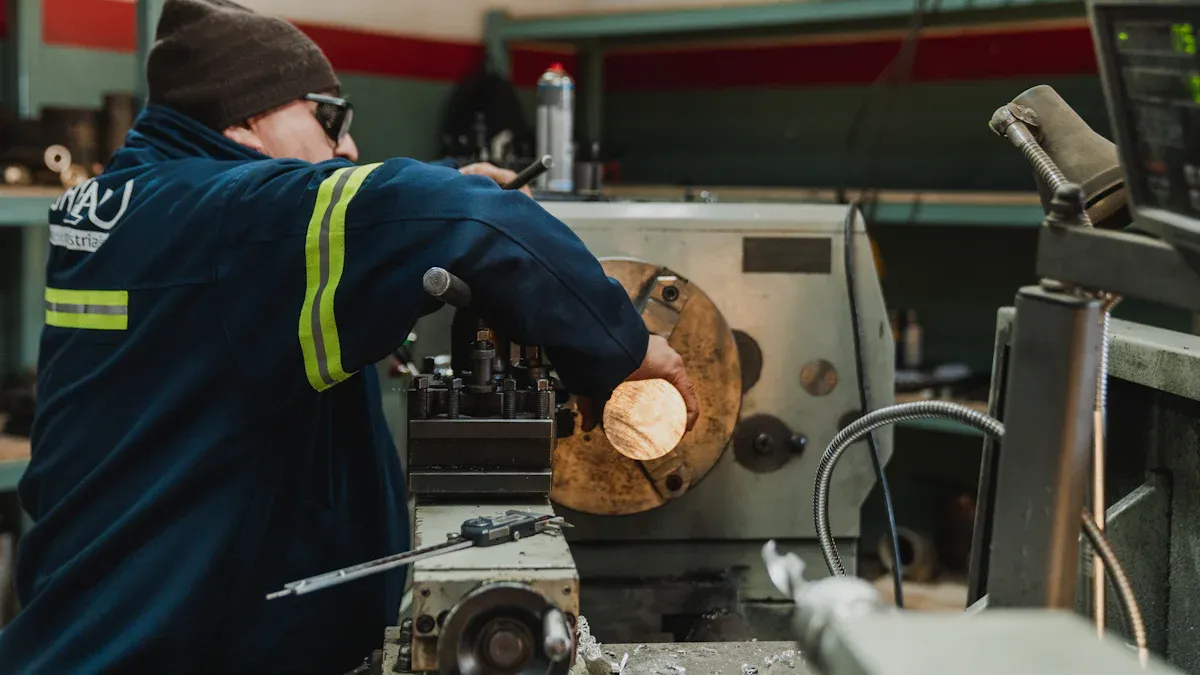
A CNC lathe machine lets you shape metal into parts with precision. If you are new to metalworking, you may wonder about lathe machines. These machines are easy for beginners to use and come with many beneficial features. Many people appreciate how lathe machines work with different metals, allowing for versatile applications. Lathes help you make things very exact, enabling you to finish your work faster. You save materials when you use a lathe machine, making it an efficient choice for various projects. You can apply your skills to many metal jobs, and beginners often feel proud of what they create. With tips for new machinists, you can start working with metal and discover new ways to build, fix, and create using lathe machines.
CNC lathe machines help beginners shape metal very accurately. They are great for many kinds of projects.
Knowing the types of lathe machines helps you pick the best one. You can choose for metal or wood work.
Setting up your lathe the right way is very important. Safety steps matter a lot. Always wear safety gear. Always check your machine before you use it.
Cleaning and oiling your lathe often keeps it working well. This helps your lathe last longer.
Try different machining processes like turning and threading. This helps you get better at metalworking. You will feel more confident with practice.
You may ask what a lathe machine does. In engineering, a lathe machine spins a round object. A cutting tool shapes the object as it turns. You hold the piece steady and spin it on its axis. The cutting tool moves and carves the metal. This is called machining. You use a metal lathe machine to turn, taper, or drill metal. Knowing about lathe machines shows why they matter in shops and factories. When you learn the basics, you see how lathe machines make metalworking easier and more exact.
Lathe machines have a simple job. You use them to shape metal very accurately. You can make smooth surfaces, threads, and holes. The metal lathe machine helps you make parts for cars, planes, and tools. You control the size and shape of each part. This lets you make custom pieces for different jobs. You also save time and materials because lathe machines work fast and well.
Tip: If you want to work with metal, start by learning how a metal lathe machine works. It will help you with many tasks.
Lathe machines are found in many places. You see them in car shops, airplane factories, and woodworking studios. Here are some ways people use lathe machines:
Precision Machining: You shape, cut, or thread metal very exactly.
Versatility in Applications: You use lathe machines in car and airplane industries.
Efficiency in Material Removal: You take away metal quickly and waste less.
Customization: You make special shapes and sizes for your projects.
You also find metal lathe machines in schools and training centers. They help students learn basic machining skills. In modern workshops, you use a metal lathe machine for:
Repair and Maintenance Work: You fix broken metal parts quickly.
Prototyping and Custom One-Off Parts: You make unique pieces without hard programming.
Educational and Training Facilities: You practice machining and learn new skills.
Toolroom and Mold Making: You make small inserts and custom tools.
Small-Batch Production and Job Shops: You do low-volume jobs for different clients.
When you know how a metal lathe machine works, you can do many things. You can build, fix, and create with confidence.
When you learn about lathe machines, you see many kinds. Each one is good at certain jobs. Some are for metal, and some are for wood. Let’s check out the main types you might find in a shop.
Engine lathes are strong and used a lot. You can use them for boring, drilling, and reaming. These machines do many jobs in small shops and factories. They help make engine pistons, brake drums, and car axles. You can also make shafts, gears, and threaded parts. If you work with electronics, engine lathes shape connectors and housings.
Tip: Engine lathes let you do many jobs. You can switch tasks and work on different metal parts.
Bench lathes are small and fit in home shops. These machines are great for light and careful work. They are easy to use and cost less than big lathes. Beginners like bench lathes because they are simple. You can use them for many metal projects.
| Advantage | Description |
|---|---|
| Ease of Use | Makes hard machining jobs easier. |
| Affordability | Good price for small shops and hobby users. |
| Flexibility | Works for many different machining needs. |
CNC lathes use computers to control the work. You do not need to do everything by hand. These machines are fast and make parts very exact. They can run all day and make many pieces at once. Taiz CNC Lathe is a good example of a modern CNC lathe. Taiz has models like the Efficient Turret Lathe for making lots of parts. The Automatic Turning Center is for making very exact pieces. These machines help you work fast and get great results.
| Feature | CNC Lathes | Manual Lathes |
|---|---|---|
| Control | Computer runs the machine | You control by hand |
| Labor Requirement | Needs less work from you | Needs more work |
| Accuracy | Very exact | Can change |
| Production Time | Makes many at once | Makes one at a time |
| Fault Rate | Fewer mistakes | More mistakes |
Specialty lathes are made for special jobs. You might use a wood lathe to make vases or knobs. Some specialty lathes help make parts for planes or cars. Metal lathes in this group can handle special shapes and sizes. You can find lathes just for wood or just for metal.
| Type of Lathe | Unique Function |
|---|---|
| Wood Lathe | Makes cool shapes and designs in wood |
| Metal Lathe | Helps make metal parts very exact |
Note: When you know the types of lathes, you can pick the best one. You will do better work and have more fun with your projects.
When you look at a metal lathe machine, you see many important parts. Each one helps you shape metal with care and accuracy. Let’s break down the main components of a lathe machine and see how they work together.
The bed is the long, flat base of your metal lathe machine. It holds everything steady. You need this strong foundation to keep your work smooth and safe. The bed stops the machine from shaking when you cut metal. This means you get better results every time.
The headstock sits at one end of the bed. It holds the spindle and the motor. The headstock spins your metal piece and keeps it in place. You want the headstock close to your work so you get less bending and more accuracy. The clamping system in the headstock makes sure your metal does not move while you work.
Tip: A solid bed and a strong headstock help you make clean, exact cuts on your metal lathe machine.
Here’s a quick look at these parts:
| Component | Function |
|---|---|
| Headstock | Houses the spindle and motor, driving the rotation. |
| Bed | Provides a stable base for all components. |
The tailstock sits on the other end of the bed. You use it to hold the far end of long metal pieces. This keeps your work from bending or shaking. You can also put tools in the tailstock for drilling or boring holes in your metal.
The carriage moves along the bed. It holds the cutting tool and lets you move it into the right spot. The carriage has smaller parts like the saddle, apron, and cross slide. These help you guide the tool for smooth, careful cuts.
| Component | Role in Supporting and Moving Workpiece |
|---|---|
| Tailstock | Holds and supports the free end of long workpieces, preventing deflection during turning. Can also hold tools for drilling and boring. |
| Carriage | Moves the cutting tool into position for precise machining, consisting of several subcomponents like the saddle, apron, cross slide, and tool post that facilitate this movement. |
The chuck grabs your metal piece and holds it tight. You want your metal to stay still while you shape it. The chuck can open and close to fit different sizes of metal. This makes it easy to switch between jobs.
The tool post sits on the carriage. You use it to hold your cutting tool in the right spot. You can turn the tool post to get the best angle for each job. For boring, you keep the tool holder close to the part. For parting off, you shift the tool post toward the tailstock for extra support. When you face a piece, you might angle the tool a bit to stop it from chattering.
| Operation | Tool Positioning Requirement | Reason for Positioning |
|---|---|---|
| Boring | Tool holder should be close to the part or chuck jaws without hitting the cross slide. | Ensures accuracy and prevents interference during the boring process. |
| Parting off | Tool post should be shifted towards the tailstock for proper support under the tool. | Provides stability and support for the tool, ensuring effective cutting during parting off operations. |
You need all these components of a lathe machine to work together. When you set up your metal lathe machine the right way, you get strong support, smooth movement, and sharp, clean cuts. This helps you shape metal safely and with confidence.
When you use lathe machines, you start by placing your metal piece in the chuck. The headstock and spindle give the power to spin your work. This spinning action is called rotational motion. You control the speed and direction, which helps you get the shape you want. The stability of this motion is important. If the metal wobbles, your cuts will not be smooth. You want the metal lathe machine to hold your piece steady so you can make accurate cuts. The cutting tool moves along a set path while the metal turns. This lets you remove extra material and shape your workpiece to the right size. When you learn how lathe machines work, you see how important it is to keep everything stable and controlled.
Tip: Always check that your metal lathe machine is set up right before you start. A steady spin means better results.
You use a metal lathe machine to shape metal in many ways. Each process helps you create different parts or finishes. Here are the main steps you follow:
Turning: You take away material from the outside of your metal piece. You can do rough turning to remove a lot or finish turning for smooth surfaces.
Facing: You make the end of your metal workpiece flat and smooth.
Grooving: You cut narrow grooves into the metal. You can do this on the outside or on the face.
Parting: You cut off a section of the metal at the end of your job.
Threading: You make spiral grooves on the outside of your metal piece. These grooves help you screw parts together.
Knurling: You press patterns into the metal surface. This makes it easier to grip and looks nice.
When you use a metal lathe, you control the tool and the movement. You decide how deep to cut and how fast to go. You learn how a metal lathe works by practicing these steps. Each process lets you shape metal for different jobs, from making car parts to building tools. You see how the metal lathe machine helps you turn raw metal into useful pieces.
Note: Try each process on scrap metal first. You will get better with practice and see how your metal lathe machine responds.
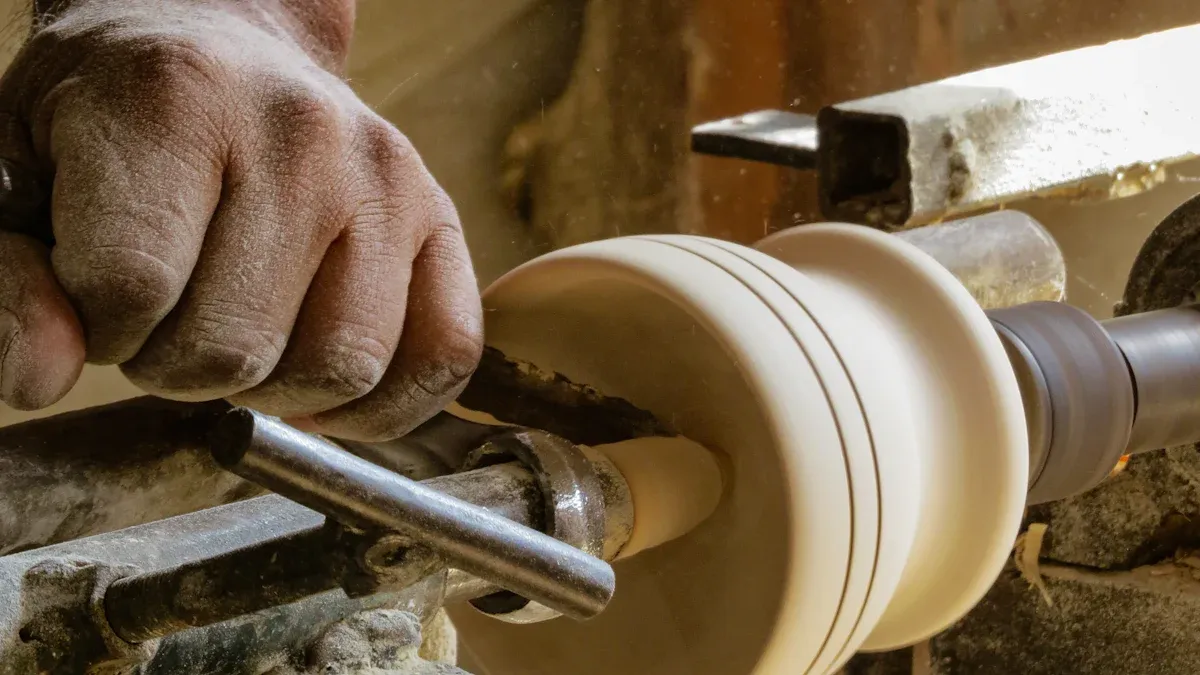
Getting started with lathe machines feels exciting. You want to make sure every step is clear before you begin. The primary steps for using lathe machines help you get the best results and keep you safe. Let’s walk through each part together.
Setting up your metal lathe is the first thing you do. You want everything ready before you start working with metal. Good preparation means you avoid problems and get clean cuts. Here’s what you should do:
Wear close-fitting clothes. Loose sleeves or jewelry can get caught in moving parts.
Put on safety glasses and closed-toe shoes. You protect your eyes and feet from flying metal chips.
Skip the gloves. You need your fingers free to handle small metal pieces.
Keep your arms and hands away from moving parts.
Check that all guards are in place. Make sure everything is locked down.
Listen for strange noises from the metal lathe machine. Stop right away if you hear anything odd.
Now, follow these steps to get your metal lathe machine ready:
Press the E-stop to make sure the lathe is off.
Clean and clear the lathe. Remove any metal chips or dust.
Secure the workpiece so it does not move.
Select and install the cutting tool.
Calculate the RPM for your cutter and the metal you are using.
Use the handwheel to rotate the chuck and check for collisions.
Set the speed control to a low number.
Lock the Quick lever into the forward position.
Tip: A careful setup leads to better results. If you want more help, check out online tutorials and videos. Many machinists share step-by-step guides for beginners.
Mounting the workpiece is a key part of setting up your metal lathe. You want the metal held tight and straight. If you skip this step or rush, your cuts will not be accurate. Here’s how you do it:
Pick the right work holding device. Use a chuck, collet, or centers based on the size and shape of your metal.
Make sure the lathe centers are in good shape and lined up.
Center-drill the workpiece and attach a lathe dog securely.
Use a ball bearing live center for the tailstock. This helps avoid lubrication problems.
Adjust the tailstock to support the metal. Tighten the clamp-down nut.
Check that the lathe dog tail fits well in the drive plate slot. It should not bind.
Set the lathe carriage stop. This protects your machine and helps you know where to end your cut.
Start with rough cuts. Leave about 0.020 inch before you do finish cuts.
Note: When mounting the workpiece, take your time. A secure setup means your metal lathe machine works smoothly and safely.
Choosing the right tool for your metal lathe machine makes a big difference. You want the tool to match the job and the type of metal you are working with. Here’s what you do:
Level the machine. Make sure your metal lathe sits on a flat, stable surface.
Install the workpiece. Fasten it with a chuck or collet.
Pick the cutting tool. Use turning tools for shaping, facing tools for smoothing ends, and threading tools for making grooves.
Adjust the feed and speed. Set the spindle speed and feed rate for your metal and tool.
Do a safety check. Make sure guards are in place and you have your safety gear on.
Tip: If you are not sure which tool to use, look for beginner guides online. Many machinists post videos and charts to help you pick the right tool for each metal lathe job.
You feel ready to make your first cut on the metal lathe. This step is where you see your work come to life. You want to avoid common mistakes and get a smooth finish. Here’s a table with mistakes and how to fix them:
| Mistake | Fix |
|---|---|
| Not tightening the chuck jaws or using the wrong workholding | Make sure the workpiece is held tight and runs true in the chuck or collet. Use the right device for your metal. |
| Using a dull or damaged cutting tool | Check your cutting tools. Use sharp, clean tools that match your metal. |
| Wrong spindle speed or feed rate | Look up the right speeds and feeds for your metal and tool. Start slow and adjust as you go. |
| Not measuring often | Stop the machine and clean the workpiece before measuring. Use good measuring tools and check often. |
Tip: Take your time with the first cut. Watch how the metal reacts. If you see chips flying or hear strange sounds, stop and check your setup.
You learn a lot by practicing. Each time you use your metal lathe machine, you get better at setting up your metal lathe, mounting the workpiece, picking tools, and making cuts. If you want more help, search for online tutorials. Many machinists share tips and tricks for beginners. You can watch videos or read guides to see each step in action.
Working with metal can be fun and rewarding, but you need to stay safe every time you use a lathe. If you follow the right safety guidelines, you can avoid injuries and keep your projects on track. Let’s look at what you need to wear, what you should do, and what mistakes to avoid when you learn how to use a metal lathe.
You want to protect yourself before you even turn on the lathe. The right protective equipment keeps you safe from flying metal chips and sharp tools. Here’s what you should wear:
Safety glasses or CSA-certified goggles to shield your eyes from metal bits.
Closed-toe shoes to protect your feet from falling objects.
A snug shirt and pants with no loose sleeves or strings.
No jewelry, watches, or anything that could get caught in the machine.
Hearing protection if the shop is loud.
Gloves only when handling raw metal, but never while the lathe is running.
Tip: Good lighting helps you see your work clearly and spot any problems early.
You want to build good habits every time you use lathe machines. These steps help you stay safe and get better results with your metal projects:
Keep your work area clean and free from clutter.
Make sure the floor has no tools, cords, or scraps that could trip you.
Check that the lathe has a start and stop button within easy reach.
Always secure and clamp your metal workpiece tightly.
Inspect the chuck for any wear or damage before you start.
Follow the job instructions for speed, feed, and depth of cut.
Use a barrier guard if you run the lathe in automatic mode.
Clean up scraps and tools from the working surface after each job.
Regularly inspect and maintain your lathe to keep it in top shape.
Note: You should always wear your personal protective equipment and keep your workspace well-lit.
Many beginners make the same mistakes when they first learn how to use a metal lathe. You can avoid trouble by knowing what to watch out for. Here’s a table to help you remember:
| Mistake | Why It’s a Problem | What You Should Do |
|---|---|---|
| Neglecting safety precautions | Can cause serious injuries | Always follow safety rules and wear protective equipment |
| Not securing the workpiece | Workpiece can shift or fly out | Clamp your metal tightly before starting |
| Using the wrong or dull tool | Poor finish and tool damage | Pick the right tool and keep it sharp |
| Wrong speeds and feeds | Tool wear and rough surfaces | Check the settings for your metal and tool |
| Not measuring often | Scrapped parts and wasted metal | Measure your work regularly during each step |
You want to check your setup before you start. If you hear strange noises or see something odd, stop the lathe right away. Always ask for help if you feel unsure about how to use a metal lathe. Practice makes you better, but safety keeps you working.
Callout: Stay alert and never rush. Taking your time helps you avoid mistakes and keeps you safe around metal.
Picking the best beginner metal lathe can feel like a big step, but you can make it simple by focusing on what matters most. You want a lathe that matches your skills, your projects, and your budget. Let’s break down what you should look for when you start your search.
When you look for the best beginner metal lathe, you want features that make learning easy and safe. Here are some things you should check before you buy:
Material Type: Think about the metal you plan to work with. Some lathes handle steel, aluminum, or brass better than others.
Project Size and Capacity: Choose a lathe that fits the size of your metal projects. A small lathe works for jewelry or tiny parts, while a bigger one handles larger pieces.
Budget: Set a budget that feels right for you. Focus on the features you need most.
Automation and Precision Needs: Decide if you want a manual lathe for hands-on control or a CNC lathe for automated, precise work.
Additional Features: Look for things like variable-speed controls and built-in safety features. These make your experience smoother and safer.
Tip: The best beginner metal lathe should feel comfortable and easy to use. If you feel confident, you’ll learn faster.
You want to get the most value for your money when acquiring the right machine. Entry-level benchtop or mini lathes usually cost between $800 and $2,500. You can find these lathes from industrial suppliers, specialty retailers, or online platforms like eBay and Machinio.
| Type of Lathe | Price Range | Sourcing Options |
|---|---|---|
| Benchtop/Mini Lathes | $800 – $2,500 | Industrial suppliers, specialty retailers, online platforms (eBay, Machinio) |
When you shop, compare prices and check reviews. The best beginner metal lathe for you should fit your budget and your workspace.
If you want advanced features and top precision, you should check out Taiz CNC Lathe. Taiz offers CNC lathe machines that focus on efficiency and accuracy. These lathes work well for both small and large metal projects. You get options like the Efficient Turret Lathe for mass production or the Automatic Turning Center for detailed parts. Taiz CNC Lathe stands out if you want the best beginner metal lathe with room to grow as your skills improve.
Note: Choosing the right lathe machine helps you enjoy your projects and get great results. Take your time, ask questions, and pick the best beginner metal lathe for your needs.
Taking care of your lathe keeps your projects running smoothly and helps you avoid costly repairs. You don’t need to be an expert to handle basic maintenance. Let’s break down the steps so you can keep your metal lathe in top shape.
You want your lathe to stay clean and move easily. Here’s a simple routine you can follow:
Remove shavings after each use. Brush away metal chips and use an air compressor to clear out debris.
Wipe down the lathe with a rag and a little kerosene or WD-40. This gets rid of oil, dust, and other contaminants.
Replace lubricants on joints and moving parts. Lubricate the headstock bearings before you start and every couple of hours.
Add a protective coat of oil to exposed metal surfaces. This helps prevent rust.
Cover your lathe with a cotton sheet when you’re done. This keeps dust off and protects the ways.
Tip: Clean cuttings regularly so they don’t wear down the ways or other important parts.
You should check your lathe often to catch problems early. Here’s a table to help you remember what to do:
| Frequency | Maintenance Task | Description |
|---|---|---|
| Daily | Inspect equipment | Look for wear, damage, or loose parts |
| Daily | Clean machine | Remove dust and metal chips |
| Daily | Check lubrication | Make sure moving parts have enough oil |
| Daily | Examine safety features | Check guards and emergency stops |
| Weekly | Inspect belts and chains | Adjust tension and alignment |
| Monthly | Lubricate components | Apply fresh lubricant to moving parts |
| Monthly | Check precision and alignment | Make sure everything lines up correctly |
Note: Always remove the chuck key before starting your lathe. Double-check that your workpiece and tools are secure.
Sometimes your lathe acts up. You can fix most problems if you know what to look for:
Watch for strange sounds or vibrations. These can mean something is loose or worn out.
Check your workpiece for accuracy. If cuts look off, realign the headstock and tailstock.
Replace worn cutting tools. Sharp tools help you get clean cuts in metal.
Tighten any loose workholding parts. This keeps your metal steady.
Adjust feed rates and speed if you see rough finishes or tool marks.
Callout: Regular checks and quick fixes keep lathe machines working well and help you avoid bigger problems later.
You’ve learned a lot about lathe machines and how to get started with your own lathe. Here are a few things to remember when you work with metal:
Always wear personal protective equipment.
Follow the right steps for your lathe to stay safe.
Lubricate moving parts often for smooth action.
Check your tools for wear and keep them sharp.
Cover your lathe when you finish to keep dust away.
Stay curious and keep learning new skills. You can build your confidence with each metal project. Every time you use a metal lathe, you get better. Hands-on practice helps you turn raw metal into something amazing!
You can make bolts, bushings, rings, knobs, and even small tools. Many people use lathes to fix parts or create custom pieces for cars, bikes, and hobbies.
No, you can learn the basics quickly. Start with simple projects and follow safety rules. Practice helps you get better. Many beginners enjoy seeing their progress.
Pick a tool that matches your project and the metal you use. Turning tools shape the outside. Facing tools smooth the ends. Threading tools cut grooves. Ask for help if you feel unsure.
Clean your lathe after every use. Wipe away metal chips and dust. Oil the moving parts. This keeps your machine running smoothly and helps it last longer.
Yes, but always with adult supervision. You must follow safety rules and wear protective gear. Start with simple tasks and never rush. Safety comes first!


