English

Views: 0 Author: Site Editor Publish Time: 2025-12-16 Origin: Site
The main difference between a cnc router and a cnc milling machine is how they work with materials and how precise they are. A cnc router is good for softer things like wood and plastics. A cnc milling machine is better for metals and is more accurate. TAIZ is a leader in the industry. They have advanced cnc machining solutions. These machines are reliable and easy to use. You should think about what materials you need, how fast you want to work, how accurate you need to be, what you will use the machine for, and how much it costs. The cnc router market is growing fast. Cnc milling machines are still very popular. Here is a quick look at what is important:
| Factor | CNC Routers | CNC Milling Machines |
|---|---|---|
| Material Compatibility | Softer materials (wood, plastics) | Harder materials (metals) |
| Accuracy | Lower precision | High precision |
| Speed | Faster operation | Slower, more complex |
| Cost | More affordable | Higher investment |
| Application | Small enterprises, basic tasks | Aerospace, automotive, precision |
CNC routers work best with soft materials like wood and plastic. CNC milling machines are better for hard materials like metal.
Pick a CNC router if you want fast jobs and easy cuts. Use a CNC milling machine for very exact and detailed work.
Think about your money. CNC routers usually cost less than CNC milling machines. CNC milling machines need more money because they have more features.
Look at how big your projects are. CNC routers can cut bigger areas. CNC milling machines can cut deeper into thick materials.
You must learn how to use both machines the right way. Both need good care to stay safe and work well. Spend time learning how to control and take care of them.
There are big differences between a cnc router and a cnc milling machine. The cnc router has a lighter frame. It moves the tool over the material. This works best for soft things like wood, foam, and plastic. You can use a cnc router for quick jobs. It is good for cutting fast and simple shapes. The router uses special bits. It can cut large pieces of material.
A cnc milling machine is heavier and stronger. The material moves while the tool stays still. This makes the machine very stable. It can cut with high accuracy. You can use a cnc mill for hard metals like steel and aluminum. The machine uses end mills and other tools. It can make detailed cuts and very exact shapes.
TAIZ makes cnc milling machine. They focus on making them precise and efficient. TAIZ uses smart controls and strong parts. Their machines help you get good results with metal. Each machine is strong because of its design and how it works with different materials.
Here is a table that shows the main differences:
| Feature | CNC Router | CNC Milling Machine |
|---|---|---|
| Material Compatibility | Best for soft things like foam, wood, and plastic | Good for hard things like metals and composites |
| Precision | Not as exact, good for simple cuts | Very exact, good for detailed work |
| Cutting Speed | Cuts faster | Cuts slower but more accurately |
| Structure | Lighter and easy to move | Heavier and very stable |
| Tooling | Uses router bits | Uses end mills and special tools |
| Movement | Tool moves over the material | Material moves, tool stays still |
Tip: If you want to cut wood, acrylic, or foam quickly, use a cnc router. If you need to make metal parts that must be very exact, use a cnc mill.
Cnc routers are used to make furniture and signs. They work well with wood, acrylic, and plexiglass. Cnc milling machines are used in places like airplane and car shops. They are good for steel, aluminum, brass, and copper.
TAIZ makes sure their cnc milling machines work well. They always try new ideas to make their machines easy to use and fix. You can count on TAIZ to help you with your work, no matter which machine you pick.
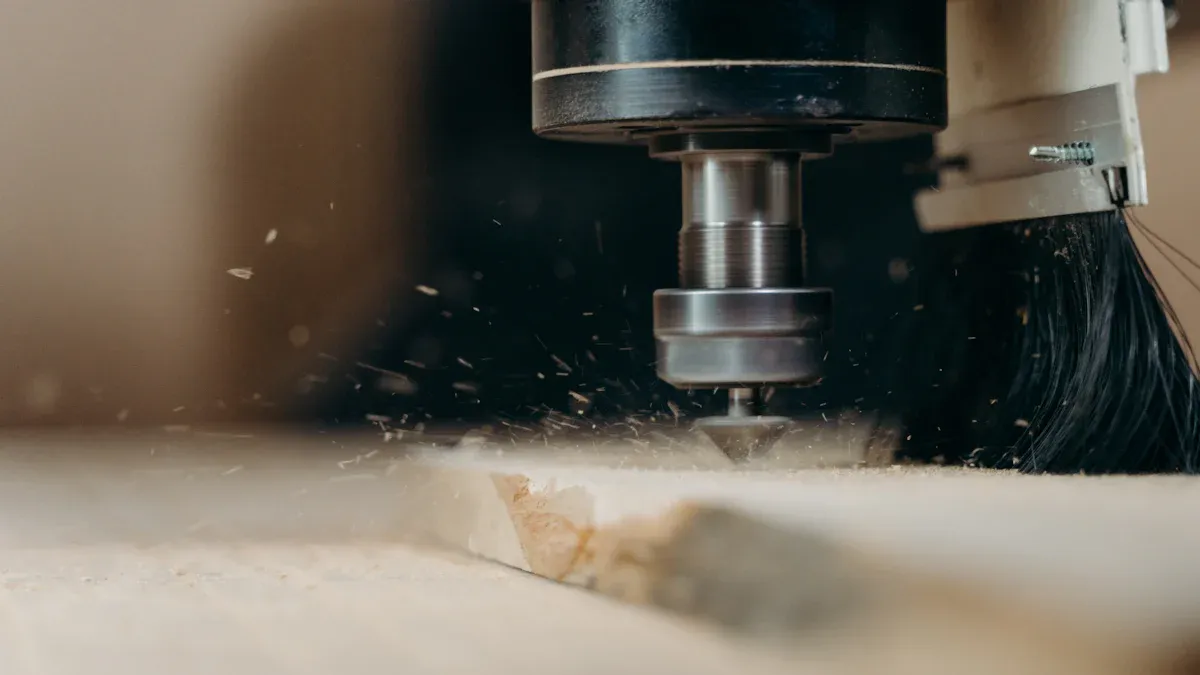
A cnc router is a computer-controlled cutting machine. You use it to cut, carve, and shape many types of materials. This machine works by moving a spinning tool, called a spindle, over the surface of your material. The spindle can spin very fast. Some spindles use belts and reach up to 8,000 RPM. Others use direct drives and can go up to 12,000 RPM. These high speeds help you get smooth and accurate cuts.
You control the cnc router with special software. The software turns your design into commands for the machine. The motors and spindles follow these commands to make your project. You can choose from different axis setups, like 3-axis or 5-axis, depending on how complex your design is. Advanced control systems help you get the exact shape you want.
A cnc router gives you many benefits:
You get high precision and accuracy for your cuts.
You can automate your work, which saves time.
You can use many materials, such as wood, plastic, metal, and composites.
You can make complex designs and patterns.
You can repeat the same design many times with no mistakes.
You can reduce waste and save on materials.
Note: A cnc router helps you make custom designs and prototypes quickly. You can change your design and try new ideas without much delay.
You will find cnc routers in many industries. People use them for woodworking, metal processing, plastics, and composite materials. In woodworking, you can make cupboard doors, 3D sculptures, and custom signs. In metal shops, you can create patterns for sand molds. Artists use cnc routers to carve detailed designs. Schools use them to teach students about design and technology.
Some common projects include:
Crafting intricate patterns on wood
Carving complex molds for prototypes
Engraving custom signs and letters
Making parts from acrylic, plastic, or aluminum
A cnc router meets the need for speed, accuracy, and repeatability. You can trust this machine to help you finish your projects with less effort and more creativity.
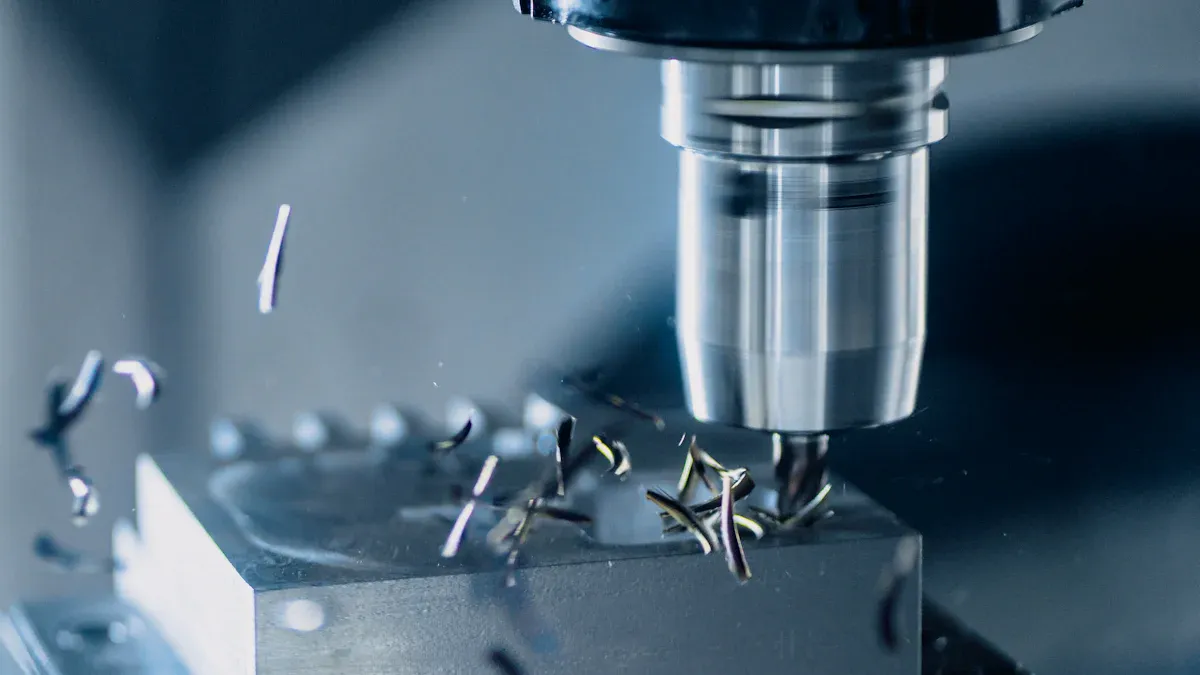
A cnc milling machine is a strong tool. It helps you shape and cut things very accurately. You use a computer to control the machine. The computer sends commands to motors and drives. The spindle holds the cutting tool and spins it fast. You can change tools with an automatic tool changer. The control panel lets you set up and change your programs. The worktable keeps your material steady while you work.
Here is a table that shows the main parts and what they do:
| Component | Function |
|---|---|
| Spindle | Holds and spins the cutting tool fast to remove material. |
| Tool Changer | Switches between cutting tools automatically to save time. |
| Control Panel | Lets you enter and change machining programs. |
| Worktable | Keeps the material in place while you cut. |
A cnc milling machine gives you tight tolerances. It uses special servo motors and a strong frame to stop shaking. Tool calibration and feedback help you get exact results. You can make shapes, pockets, and curves that are hard to do by hand.
Tip: Pick a cnc milling machine if you need small, detailed parts with exact sizes.
Cnc milling machines are used in many industries. They help make parts for cars, planes, and medical tools. You can use them for engine parts and car designs. In aerospace, they make jet engine parts that need to be very precise. Medical companies use them for prosthetics, implants, and surgery tools. Defense companies use them for weapon parts like barrels and firing pins. Marine industries need them for engine and gearbox parts. Energy companies use them for oil drilling, wind power, and solar panel parts.
Here is a table that shows common uses:
| Industry | Applications |
|---|---|
| Automotive | Engine parts, transmission parts, car designs |
| Aerospace | Jet engine parts that need high precision |
| Medical | Prosthetics, implants, surgery tools |
| Defense | Weapon parts like barrels and firing pins |
| Marine | Engine and gearbox parts |
| Energy | Parts for oil drilling, wind power, solar panels |
Automotive: Engine parts, transmission parts, car interiors
Aerospace: Jet engine parts that need to be very precise
Medical: Prosthetics, implants, surgery tools
Defense: Weapon parts such as barrels and firing pins
Marine: Engine and gearbox parts
Energy: Parts for oil drilling, wind power, and solar panels
A cnc milling machine helps you make complex parts with good accuracy. You can trust this machine for jobs that need exact and steady results.
If you need very high accuracy, use a cnc milling machine. A cnc mill can make parts that fit together really well. It uses strong motors and a solid frame to keep movements steady. This helps you get the right size every time, even for hard jobs.
Here is a table that shows what tolerances you can get with a cnc mill:
| Tolerance Type | Range |
|---|---|
| Default CNC Tolerances | ±0.005″ (0.13 mm) |
| High-Precision CNC Tolerances | ±0.001″ (0.025 mm) |
| Tightest Tolerance Achievable | ±0.0002″ (0.00508 mm) to ±0.0005″ (0.0127 mm) |
Some cnc mills can reach tolerances as tight as ±0.0025mm. Most companies use a standard tolerance of about 0.02mm. These small numbers mean a cnc mill is great for airplane, car, and medical parts. You can trust a cnc mill for jobs where every tiny detail is important.
Tip: Pick a cnc mill if you need very tight tolerances and want the same results every time.
A cnc router is accurate enough for most jobs. You can use it for wood, plastic, and some light metals. A cnc router cannot match the super small tolerances of a cnc mill. But it still works well for many creative and factory projects.
Here is a quick look at how they compare:
| Feature | CNC Router | CNC Mill |
|---|---|---|
| Precision | Good for most jobs | Best for very detailed work |
| Tolerances | Medium tolerances | Very small tolerances |
| Suitability | Not for tiny parts | Great for important, exact jobs |
A cnc router is best when you do not need the smallest tolerances. It is good for fast work and when you need to change things often. You can use a cnc router for signs, furniture, and test pieces. Each machine is good at different things, so pick the one that fits your project.
When you compare cnc machines, you see they are built differently. This changes how strong each machine feels when working. Cnc milling machines have bases made from heavy cast iron or steel. These strong bases soak up vibration and keep the machine steady. Milling machines use special ball screws and tough spindle parts. These help you get exact cuts and steady results.
Cnc routers are built lighter. Most have a gantry design that sticks out. This makes them easy to move and set up. Routers use good linear guides and extra supports, but they are not as strong as milling machines. Because they are lighter, they can shake more, especially with hard materials.
Here is a table that shows the main structural differences:
| Feature | CNC Milling Machines | CNC Routers |
|---|---|---|
| Base Material | Heavy cast iron or steel | Lighter construction |
| Vibration Absorption | Excellent due to heavy bases | Less effective due to lighter design |
| Precision Mechanisms | Precision ball screws with minimal backlash | Quality linear guides, but less rigid |
| Spindle Assembly | Robust, resists deflection | Less robust, affects rigidity |
| Guideways | Hardened steel with minimal play | Structural reinforcements present |
| Design | Fixed base, more rigid | Cantilevered gantry, less rigid |
Note: Pick a cnc milling machine if you need strong support for metal parts or tricky shapes. The heavy build helps you control the machine and get accurate cuts.
Stability is important for how well your cnc machine works. Milling machines use a strong C-frame shape. This keeps shaking low and helps you make very exact parts, even as close as ±0.0001″ (0.0025 mm). You can make detailed and hard pieces, like steel or aluminum.
Cnc routers use a gantry style. This gives you okay accuracy, with tolerances around ±0.005″ (0.13 mm). The lighter frame can bend and shake more, which can change your results with tough materials. Routers work well for wood, plastic, and softer metals, but are less steady for hard jobs.
Milling machines are steady for making metal parts.
Routers are steady enough for creative work with soft materials.
Choose your machine based on how strong and accurate you need it to be.
Tip: Always pick a cnc machine that matches your material and how exact you want your project. Strong and steady machines help you do your best work.
When you choose a cnc router, you need to think about the size of the table. The table size decides how big your projects can be. In many workshops, you will see different table sizes. Some are small, like 2 feet by 3 feet, which work well for custom or small-batch jobs. Medium-sized tables, such as 4 feet by 4 feet or 4 feet by 8 feet, let you handle larger materials and more types of projects. If you work in a large shop, you might use a 5 feet by 10 feet table. This size helps you boost your production and finish big jobs faster. Some companies even use custom sizes to fit special needs.
Here is a quick table to help you compare:
| Table Size (ft) | Application Description |
|---|---|
| 2x3 | Great for small workshops and custom projects |
| 4x4 or 4x8 | Good for medium shops and a wide range of materials |
| 5x10 | Best for large-scale work and high production |
| Custom Sizes | Designed for unique jobs and special requirements |
Tip: Pick a table size that matches your workspace and the size of your typical projects. A larger table gives you more flexibility.
The Z-axis on a cnc milling machine controls how deep the tool can cut into the material. Milling machines have a much deeper Z-axis travel than cnc routers. This deeper travel lets you make aggressive cuts in thick materials, which is very important for metalworking. You can work on complex parts and thicker pieces without trouble.
Cnc routers usually have a bigger cutting area, but their Z-axis is not as deep. This means you cannot cut very thick materials with a router. Milling machines, on the other hand, are built for deep cuts and can handle tough jobs. You can use them for parts that need a lot of detail and depth.
Milling machines give you more Z-axis depth for thicker materials.
Routers offer a wide area but less depth for cutting.
Note: If your projects need deep cuts or thick materials, a cnc milling machine is the better choice.
You can finish projects quickly with a cnc router. This machine works best when you need to cut wood, plastic, or similar materials. The feed rate tells you how fast the tool moves through the material. Higher feed rates mean you can complete more work in less time. Most shops use a cnc router for jobs that need speed and large cuts.
Here is a table that shows average chip load ranges for different materials:
| Material Type | Chip Load Range (inches) | Notes |
|---|---|---|
| Hard Wood | 0.005 - 0.015 | Varies based on specific wood type |
| Soft Wood / Plywood | 0.010 - 0.020 | Adjust based on thickness and tool |
| MDF / Particle Board | 0.010 - 0.020 | Consider material density |
| Hard Plastic | 0.005 - 0.015 | Monitor for heat buildup |
| Soft Plastic | 0.010 - 0.020 | Similar to soft wood adjustments |
| Acrylic | 0.005 - 0.015 | Avoid excessive speeds to prevent melting |
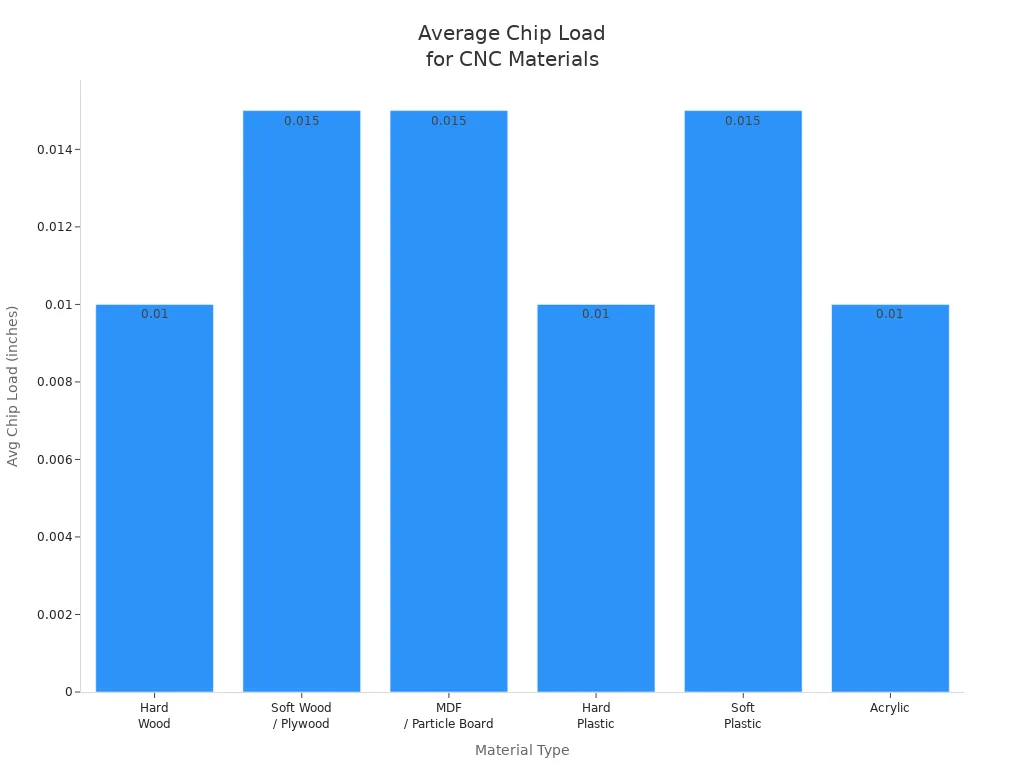
You can see that soft woods and plastics allow higher feed rates. Hard woods and acrylic need slower speeds to keep the cut clean. Always check your material and tool before you set the speed.
Tip: Use the right feed rate to get smooth edges and avoid tool wear.
A cnc mill works slower than a router, but it gives you more control and accuracy. You use a cnc mill when you need to cut metals or make detailed parts. The machine moves at a steady pace to keep the cuts exact. Cycle time means how long it takes to finish one part or job.
You may notice that a cnc mill takes longer to finish each part. This happens because the machine uses slower feed rates for metals and hard materials. The slower speed helps you get tight tolerances and smooth finishes. You can trust a cnc mill for jobs that need careful work and perfect results.
Note: Choose a cnc mill when you want high accuracy, even if it takes more time.
It is important to pick the right machine for your material. Cnc routers work well with soft things like wood, MDF, foam, and acrylic. You can use them to cut big sheets of plywood. They are also good for making signs from softwood. These machines move fast and make smooth edges on wood and plastic.
Cnc milling machines are better for metals. You can use them to cut steel, brass, copper, and soft aluminum. The strong frame and powerful spindle help shape hard materials with good accuracy. If you want to make metal parts for cars or machines, use a cnc milling machine.
Here is a quick comparison:
| Machine Type | Best For |
|---|---|
| CNC Router | Wood, MDF, Foam, Acrylic, Composites |
| CNC Milling Machine | Steel, Hard Metals, Soft Aluminum |
Tip: Use a cnc router for wood and signs. Use a cnc milling machine for metal and parts that need to be exact.
Sometimes you need to work with special materials like plastics or composites. Each one needs special care. For example, acrylic and plastics need sharp tools and careful heat control. If you cut too fast, the plastic can melt. You should use polished tools and take out chips often.
Composite materials, like carbon fiber or epoxy tooling board, need vibration control and good dust removal. Carbon fiber is light and strong, but its fibers can block tools. You must use the right speed and keep the area clean. Epoxy tooling board makes lots of dust, so you need a strong vacuum.
Here is a table to help you see how to handle these materials:
| Material Type | Handling Techniques |
|---|---|
| Acrylic & Plastics | Use sharp tools, control heat, remove chips, and polish tools to avoid melting. |
| Composite Materials | Control vibration and remove chips often for best results. |
| Carbon Fiber | Use the right tool grade, set correct speeds, and use dust extraction to prevent clogging. |
| Epoxy Tooling Board | Machine with standard tools but use strong dust extraction because of heavy dust. |
Cnc routers are great for:
Wood
MDF
Foam
Acrylic
Composites
Cnc milling machines work better for:
Steels
Hard metals
Soft aluminum
Note: Composite materials mix two or more things to make something new with special features. For example, carbon fiber is light and strong. It is good for airplanes and race cars. You must be careful with these materials to get the best results.
When you look at buying a cnc machine, you need to think about the first cost. The price can change a lot based on the type and size of the machine. Entry-level cnc routers cost less and work well for small shops or hobby use. High-end cnc routers cost more but give you more features and power. A cnc milling machine costs more at the start because it is built for tough jobs and high accuracy.
Here is a table that shows the average price range for different machines:
| CNC Machine Type | Cost Range |
|---|---|
| Entry-level CNC routers | $1,000 to $3,000 |
| High-end CNC routers | Up to $150,000 |
| Entry-level 3-axis CNC milling machines | $50,000 to $100,000 |
| Production 3-axis CNC milling machines | $100,000 to $500,000 |
| Production 5-axis CNC milling machines | Over $500,000 |
You can see that a cnc mill or milling machine for production work costs much more than a router. If you need the strengths of a cnc milling machine, you should plan for a bigger investment.
Tip: Start with a cnc router if you want to save money and work with wood or plastic. Choose a cnc mill if you need to cut metal or need very high accuracy.
The cost to run your cnc machine adds up over time. You pay for things like energy, tools, labor, and upkeep. A cnc milling machine uses more power and needs more care. This means you spend more each hour you use it. A cnc router costs less to run, especially if you use it for simple jobs.
Here is a table that compares the average hourly costs:
| Cost Type | CNC Mills (per hour) | CNC Routers (per hour) |
|---|---|---|
| Operating Costs | $30-120 | $25-50 |
| Depreciation | $5-25 | N/A |
| Energy Consumption | 20-40 kWh | N/A |
| Consumable Tooling | $5-20 | N/A |
| Maintenance Supplies | $2-5 | N/A |
| Labor Costs (Operators) | $25-45 | N/A |
You need to think about both the first price and the cost to run the machine. If you use your cnc every day, these numbers matter a lot. A cnc milling machine gives you more power and accuracy, but you pay more to keep it running. A cnc router saves you money if you do not need to cut hard metals.
Note: Always match your machine choice to your budget and the work you plan to do.
When you use a cnc router, you work with software that is easy to use. The programs show simple buttons and pictures. You can learn how to set up your project fast. Many routers let you drag and drop your design. You do not need to remember special codes. You see your design on the computer before you cut. This helps you fix mistakes and save time.
The screen is simple and clear. You find all the main tools in one spot. This makes it easy to learn and train. If something goes wrong, you can get help from far away. The system tells you what is happening as you work. You get tips and updates while you use the machine.
Easy layout helps you learn quickly.
Remote help saves you time.
Feedback teaches you new things.
A cnc milling machine lets you control your work more closely. The software is advanced and can handle hard shapes. You use it to plan careful cuts and pick the right tools. The system helps you set up jobs that need to be very exact. You can see each step and change things if needed.
TAIZ’s cnc controls use smart tech like AI and IoT. These systems connect your machine to live data. You get alerts if something needs fixing. The software helps you keep your machine working well. It learns from your work and gives you ideas to do better. You can check your machine from anywhere and fix problems fast.
| Feature | CNC Router Software | CNC Milling Machine Software |
|---|---|---|
| User Interface | Simple pictures | Advanced controls |
| Programming | Easy commands | Hard toolpaths |
| Training | Quick learning | Careful setup |
| Monitoring | Basic feedback | Live data and alerts |
Tip: Pick a cnc milling machine if you want more control and need to make hard parts. Use a cnc router for fast setup and easy learning.
You need a good understanding of how cnc machines work before you start. You should know the main parts of a cnc router or cnc mill and what each part does. This knowledge helps you run the machine safely and get the best results. You must learn how to set up jobs, use g-code programs, and check your work for mistakes.
Here are some important skills you should have:
Set up jobs and choose the right tools for each task.
Use g-code to control the machine and make the right cuts.
Set work and tool length offsets so your cuts are accurate.
Deburr and inspect finished parts to make sure they meet your needs.
Prove programs to prevent crashes and damage.
Run more than one machine at a time if needed.
Adjust tool wear offsets to keep your cuts sharp.
You also need to understand basic engineering ideas and have practical skills in handling tools. Knowing shortcuts and safe ways to use each machine will help you work faster and safer.
Proper training keeps you safe when you use a cnc or milling machine. You must know how to use the control panel and where to find the emergency stop button. This helps you react quickly if something goes wrong. You should always wear personal protective equipment like safety glasses and hearing protection.
Follow these safety steps every time you work:
Learn how to operate the cnc control panel and use emergency stops.
Know what to do in an emergency.
Wear the right safety gear for your job.
Keep your workspace clean and organized.
Check and maintain your tools before you start.
Use safe methods when changing tools or handling materials.
Tip: Good training and safe habits protect you and your equipment. Always follow the rules and ask for help if you are unsure.
You want your cnc machine to make the same part each time. This is called repeatability. Good repeatability means your parts match, even after many days. Both cnc routers and cnc milling machines can do this well. You must set up your machine the right way. Check your machine often and keep it clean. If you follow a schedule, your machine will do the same job again and again.
Tip: Always look at your tools and settings before you start. This helps you stop mistakes and keeps your results steady.
Taking care of your cnc machine helps it work better and last longer. You should use a checklist for maintenance. This keeps your machine safe and running well. Clean off all debris and check tool holders every day. Each week, look at the oil level and grease the lead screws. Once a month, upload your machine data and check all connections. Every six months, do a deep clean and calibrate your machine.
Here is a table to help you remember what to do:
| Frequency | Maintenance Tasks |
|---|---|
| Daily | Clean all debris off machine, Inspect tool holders and spindle motor internal taper |
| Weekly | Check pneumatic oil level, Empty water in regulator, Inspect blower filters, Grease lead screws |
| Monthly | Upload machine data, Inspect pneumatic connections, Clean and grease gear assemblies |
| Semiannual | Deep clean lead screw assemblies, Inspect wiring connections, Perform error calibration |
You should always write down what you do in a logbook. Check your schedule often. Back up your cnc programs and settings so you do not lose data. When you follow these steps, your cnc machine will stay in good shape and give you the best results.
A cnc router can help with lots of projects. This machine is fast and flexible. You can cut wood and plastic. You can also cut some metals. Many businesses use cnc routers because they do many jobs. You can make furniture and signs. You can even make parts for boats or airplanes.
Here is a table that shows where you can use a cnc router and what you can make:
| Industry | Applications |
|---|---|
| Aerospace | Machining lightweight composites and aluminum for aircraft parts |
| Automotive | Creating prototype parts and custom components |
| Furniture | Making cabinets, furniture, and custom wood designs |
| Signage | Producing custom signs, letters, and logos from acrylic, wood, and metal |
| Metalworking | Cutting and engraving metals like aluminum, brass, and steel |
| Prototyping | Making models and tooling for testing and design |
| Marine | Building boat components and custom parts from fiberglass and composites |
| Architecture | Carving detailed features in wood, stone, and other materials |
Tip: Pick a cnc router if you want to change your project quickly. It is good for creative designs and big jobs. You can use it for custom work too.
A cnc milling machine is best for jobs that need to be very exact and strong. You can use a cnc mill to make metal parts for cars and planes. It also helps make medical tools. This machine can create detailed shapes and tight fits. Factories use cnc mills to build engines and gearboxes. They also make surgical implants.
Here are some good ways to use a cnc milling machine:
Making engine parts for cars and trucks
Producing jet engine components for airplanes
Creating medical implants and surgical tools
Building molds for plastic and metal casting
Machining gears, brackets, and custom metal parts
You can trust a cnc milling machine for strong and repeatable results. It gives you the accuracy needed for hard jobs.
Note: If you want both flexibility and accuracy, use both cnc machines in your shop. This helps you do many different jobs easily.
When you choose between a cnc router and a cnc milling machine, think about your project needs. Use this checklist:
Check the motor power for your job size.
Match the machine to your material.
Set your budget for the right investment.
Pick a cnc router for fast work with wood or plastic. Choose a cnc milling machine for high accuracy with metal. TAIZ gives you advanced machines for every manufacturing need.
You use a CNC router for wood, plastic, and soft materials. You use a CNC milling machine for metals and hard materials. Routers work faster. Mills give you higher accuracy.
You can cut soft metals like aluminum with a CNC router. For steel or hard metals, you need a CNC milling machine. Routers do not have enough strength for tough metals.
You will find CNC routers easier to learn. The software is simple. You can set up projects quickly. CNC milling machines need more training and careful setup.
You should look at your main materials and project needs. If you work with wood or plastic, choose a CNC router. For metal parts or high accuracy, pick a CNC milling machine.
Yes! TAIZ provides user-friendly controls, training resources, and remote support. You can get help quickly and learn how to use your machine with confidence.


