English

Views: 0 Author: Site Editor Publish Time: 2026-01-19 Origin: Site
CNC machines have transformed industries by providing unmatched precision and efficiency. Whether it's aerospace, automotive, or medical manufacturing, professionals rely on these machines to cut and shape materials with incredible accuracy. But why are CNC machines the preferred choice for experts? In this article, we’ll explore why CNC machining is essential for professionals and how these machines are revolutionizing manufacturing. You’ll learn about the technology behind CNC machines, their advantages, and how they save time and money while enhancing production capabilities.
CNC machines are built to deliver exceptional precision and accuracy, which is crucial for industries where even the smallest deviation can result in significant problems. Unlike manual methods, CNC machines operate based on programmed designs, ensuring that every cut, drill, and shape is executed exactly as planned. In fields like aerospace and automotive manufacturing, where parts must meet stringent tolerances, the precision of CNC machines is unmatched.
● Example: In aerospace, precision is key. Parts like turbine blades and engine components must meet extremely tight tolerances to ensure safety and performance. A CNC machine can replicate these intricate designs with a level of accuracy that manual methods cannot match.
When it comes to high-volume production, speed is just as important as precision. CNC machines are designed for rapid operation, capable of running continuously without sacrificing accuracy. This gives manufacturers the ability to produce large quantities of parts quickly, helping them meet demanding deadlines.
Consider the automotive industry, where the production of engine components and body panels must happen swiftly to maintain assembly line efficiency. CNC machines ensure that every part is cut, drilled, and shaped quickly and precisely, reducing production time significantly compared to manual processes.
One of the standout advantages of CNC machines is their ability to handle complex geometries that are nearly impossible to create with traditional manual methods. These machines can cut intricate shapes, patterns, and designs with incredible detail and precision.
In industries like medical device manufacturing, CNC machines are essential for crafting precise surgical tools, implants, and prosthetics. These components require high complexity, and CNC machining can achieve the exact shapes necessary for optimal functionality and fit.
Feature | CNC Machines | Manual Methods |
Precision | High | Limited |
Speed | Fast | Slow |
Complex Geometry | Easy to handle | Difficult or impossible |
Volume Production | Continuous and efficient | Time-consuming |
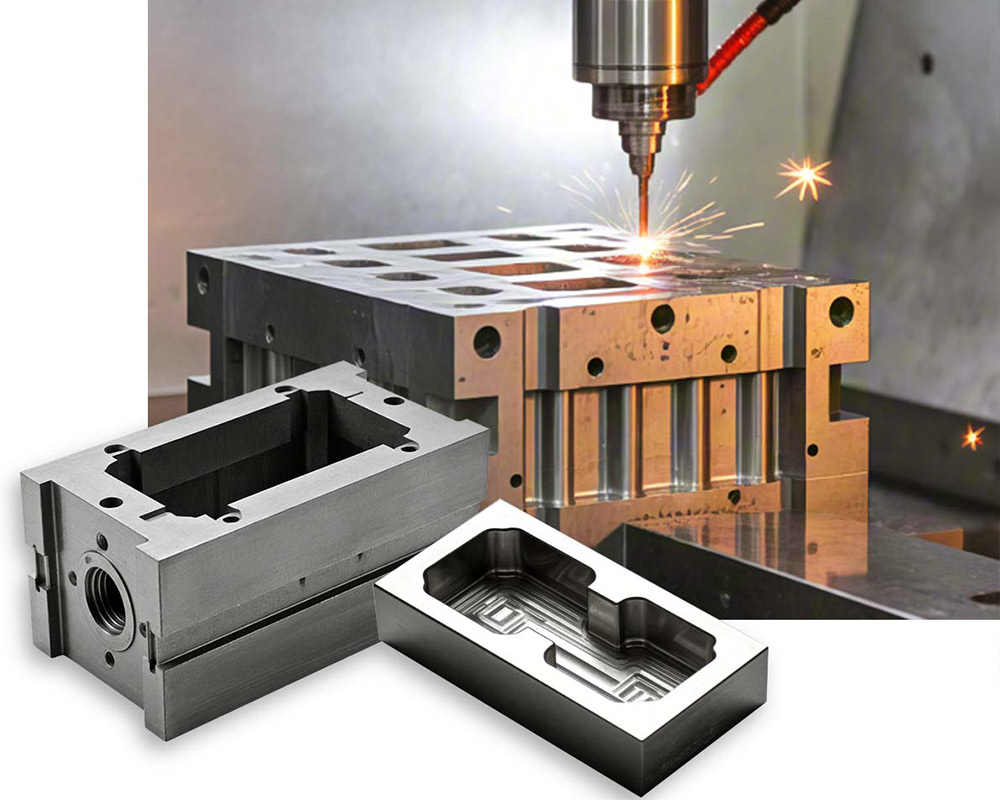
The aerospace industry demands the highest levels of precision. CNC machines are used extensively to produce components like engine parts, wings, and turbine blades, which must withstand extreme conditions. The precision provided by CNC machines ensures that these components meet strict safety and performance standards.
Key Aerospace Applications:
Application | Example Components |
Engine Components | Turbine blades, casings |
Structural Parts | Fuselage, wing ribs, tail sections |
Custom Molds and Jigs | Precision molds for casting parts |
In automotive manufacturing, CNC machines are used to create engine parts, transmission components, and custom molds for car body panels. The automotive industry relies on CNC machining for precision and repeatability. Even the smallest deviation can lead to inefficiency or safety concerns, making CNC machines an essential tool for manufacturers who need to meet exacting standards.
In the medical field, CNC machines play a crucial role in producing surgical instruments, orthopedic implants, and dental devices. These parts require exceptional precision because they directly affect patient health. CNC machining ensures that these devices are produced with the necessary tolerances, which is vital for their function and safety. For example, custom-made dental implants must fit perfectly with the patient’s natural bone structure, something CNC machines can achieve with ease.
At the heart of CNC machining is the ability to transform digital designs into physical objects. Using CAD (Computer-Aided Design) and CAM (Computer-Aided Manufacturing) software, CNC machines are programmed with detailed instructions on how to cut, shape, and finish materials. These software systems allow engineers to input precise measurements, which the CNC machine then follows to ensure every part is crafted to spec.
The automated nature of CNC machines reduces the likelihood of human error, which is often a problem in manual machining. Once programmed, CNC machines can repeat the same process endlessly, producing identical parts with incredible consistency. This repeatability is essential in industries like aerospace and automotive, where even slight variations in components can affect the entire system's performance.
CNC controllers are the brains of the machine, ensuring that every movement is precise and accurate. They manage the machine’s movements, adjusting the speed, feed rate, and position of the cutting tool to achieve the desired result. With advanced controllers, CNC machines can perform multi-axis movements, enabling them to create highly complex shapes and designs.
Aspect | CNC Machines | Manual Methods |
Programming | CAD & CAM systems for precision | No design software |
Error Rate | Low (automated) | High (manual operation) |
Repeatability | High (identical parts) | Low (manual variations) |
Controller Role | Manages precision and movement | Human supervision required |
CNC machines are known for their versatility in handling various materials, including metals, plastics, composites, and wood. This makes them indispensable across a wide range of industries. Whether it’s a steel part for automotive manufacturing or a custom plastic piece for medical devices, CNC machines can process materials with unmatched precision.
Material Types CNC Machines Handle:
Material Type | Common Use Cases |
Metals (Steel, Aluminum, Titanium) | Automotive parts, aerospace components |
Plastics (ABS, PVC) | Medical devices, packaging |
Composites (Carbon Fiber) | Aerospace, high-performance vehicles |
Wood (Hardwood, Plywood) | Furniture, cabinetry |
CNC machines also play a significant role in industries like stone cutting, where materials such as granite, marble, and limestone are often used. CNC machines can cut intricate shapes and designs into stone for countertops, sculptures, and even tombstones. The level of detail achievable through CNC machining makes it the ideal tool for creating both functional and decorative stone pieces.
While the initial cost of a CNC machine may seem high, the long-term savings are substantial. CNC machines reduce the need for manual labor, cutting down on staffing costs. They also minimize material waste by optimizing the cutting process, ensuring that every piece of material is used efficiently. These cost-saving benefits make CNC machines a wise investment for companies looking to improve their profitability over time.
CNC machines are designed to operate continuously, reducing downtime and increasing overall production efficiency. Automated systems mean that workers can focus on overseeing the machine’s operations rather than manually cutting and shaping parts. This leads to higher output and shorter lead times, which are crucial for industries that operate on tight deadlines.
The precision of CNC machines results in less material waste. With manual methods, there’s always the risk of making a mistake that could lead to wasted materials. CNC machines ensure that the exact amount of material is used for each part, reducing waste and saving money in the long run.
Benefit | CNC Machines | Manual Methods |
Initial Cost | Higher, but ROI over time | Lower, but more labor costs |
Labor Costs | Reduced (automated operation) | High (manual intervention) |
Production Efficiency | Continuous, higher output | Interrupted, slower output |
Material Waste | Minimal, optimized cutting | Higher, due to errors |
The future of CNC machines is bright, with continuous advancements in technology. One major innovation is the integration of artificial intelligence (AI), which allows CNC machines to optimize their operations based on real-time data. This means that CNC machines will become even more efficient, reducing errors and improving overall performance.
Industry 4.0 is the next phase of industrial automation, and CNC machines are an integral part of this shift. In smart factories, CNC machines are connected to other systems via the Internet of Things (IoT), allowing for real-time monitoring and adjustments. This connectivity enhances productivity and ensures that the production process is always running at peak efficiency.
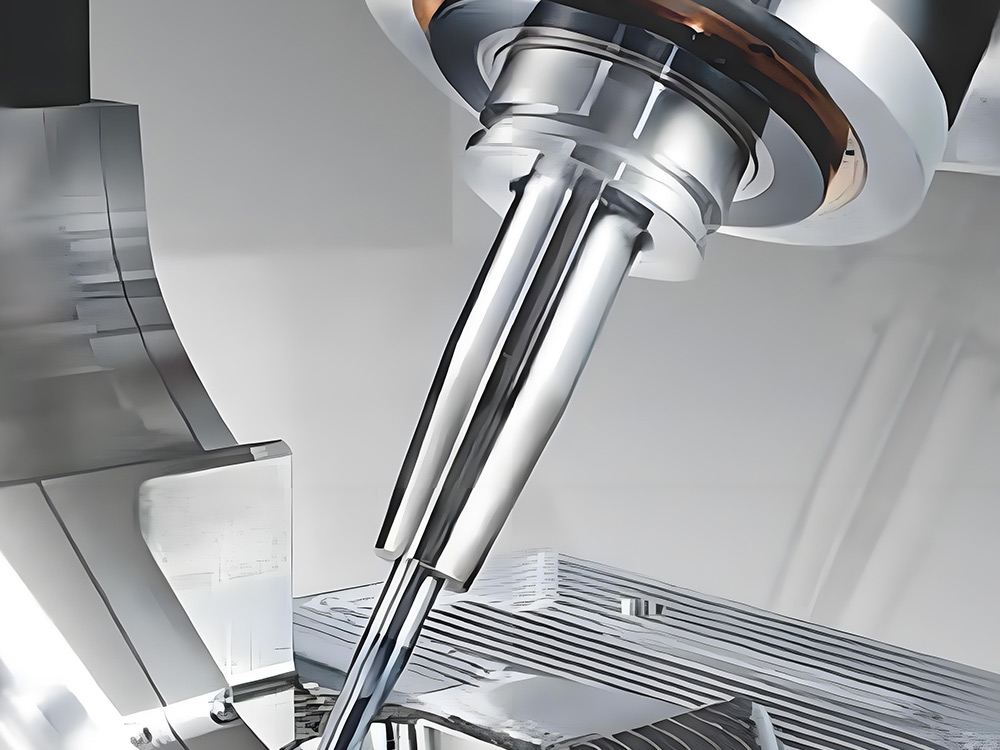
In industries like aerospace and defense, the precision of CNC machines is critical. Even the smallest deviation in a part can lead to catastrophic failures. CNC machines ensure that every part meets exacting tolerances, providing the reliability that these industries demand.
CNC machines are also essential for meeting the strict quality standards set by regulatory bodies in industries like medical manufacturing. These machines ensure that every component meets the required specifications and performs as expected, ensuring safety and functionality.
CNC machines are vital in modern manufacturing, offering unmatched precision, speed, and cost efficiency. These machines play a crucial role in industries such as aerospace, automotive, and medical manufacturing. As technology advances, CNC machines will continue to improve, enhancing productivity and accuracy. For companies looking to stay competitive, integrating CNC machines is essential. TAIZ offers advanced CNC solutions that help businesses achieve higher efficiency and precision, ensuring the production of high-quality components with ease.
A: A CNC machine (Computer Numerical Control) automates the process of cutting, shaping, and drilling materials based on a digital design. It uses CAD/CAM software to ensure precise, repeatable results, making it ideal for industries like aerospace, automotive, and medical manufacturing.
A: CNC machines provide superior precision, speed, and repeatability compared to manual methods. They can handle complex geometries, reduce human error, and significantly improve production efficiency, making them indispensable for professionals in high-precision industries.
A: CNC machining increases efficiency by reducing downtime, labor costs, and material waste. The automation ensures consistent results and faster production, leading to significant cost savings over time, especially in industries requiring high-volume production.
A: CNC machines are widely used in aerospace, automotive, medical, and manufacturing industries. They are essential for producing high-precision parts and components that meet strict tolerances, ensuring quality and performance.
A: While CNC machines may require a higher initial investment, their automation and precision reduce the need for manual labor and minimize mistakes, offering a cost-effective solution in the long run. Regular maintenance ensures their longevity and optimal performance.


