
Views: 0 Author: Site Editor Publish Time: 2026-01-19 Origin: Site
In today's fast-paced manufacturing world, the collaboration between CNC machines and sheet metal fabrication has become essential for industries aiming for precision, speed, and versatility. CNC machining is revolutionizing the way sheet metal parts are made, providing unmatched accuracy and efficiency. With advancements in technology, CNC systems have enabled manufacturers to achieve high-quality results consistently and quickly. In this article, we will explore why the synergy between CNC machines and sheet metal fabrication is crucial, and how TAIZ Intelligence is leading the way with cutting-edge solutions to enhance manufacturing processes.
CNC machines have become the backbone of modern sheet metal fabrication, automating processes that were once dependent on manual labor. These machines are designed to work with high levels of precision, reducing errors and making the manufacturing process much faster. CNC systems control machine tools like laser cutters, plasma cutters, and press brakes, ensuring that the same part can be produced repeatedly with minimal variation. TAIZ Intelligence offers a variety of CNC machines that help manufacturers automate processes like cutting, bending, and punching, delivering better precision and efficiency.
Precision is critical in sheet metal fabrication, and CNC machines excel in delivering this. Manual methods can introduce slight variations that impact product quality. However, CNC systems operate based on exacting specifications, ensuring that each part is produced to the highest standards. With TAIZ’s CNC systems, manufacturers achieve precise dimensions and consistent results with minimal adjustments.
CNC Benefits for Precision:
undefined Higher tolerance levels
undefined Reduced human error
undefined Consistent quality control
undefined Accurate replication of designs
CNC machines significantly enhance the efficiency of sheet metal fabrication by automating processes such as cutting, bending, and punching. Automation reduces manual setup and adjustment time, allowing for faster production and increased output.
Benefit | Impact |
Reduced setup and adjustments | Accelerates production, saves time |
Faster production cycles | Increases throughput, more parts made |
24/7 operation capability | Continuous production, no downtime |
Improved productivity | More efficient use of resources |
Reduced lead times | Faster delivery and response times |
One of the key advantages of CNC machining is the ability to create intricate designs that would be difficult or impossible to achieve manually. Sheet metal parts with complex cuts, bends, and shapes are common in industries like aerospace and electronics. CNC machines offer the precision needed to achieve these complex geometries, while also providing the ability to repeat the process without deviation. For example, a complex part used in an aerospace application requires exacting standards to ensure it performs well under stress, and CNC machines can deliver that level of precision.
Sheet metal fabrication involves several key operations, including cutting, bending, and punching. CNC machines have revolutionized these tasks, allowing manufacturers to achieve higher precision and faster turnaround times. With CNC-controlled laser cutters, plasma cutters, and punch presses, companies can cut through thick sheets of metal, bend them into desired shapes, and punch out holes with unparalleled accuracy. TAIZ Intelligence's CNC solutions ensure that every cut and bend is perfect, reducing the need for manual adjustments and minimizing errors.
CNC Machine Type | Application | Benefits |
Laser Cutter | Cutting thick metal sheets | High precision, minimal material waste |
Plasma Cutter | Cutting large metal sheets | Fast and efficient for thicker metals |
Punch Press | Punching holes and shapes | High-speed production, repeatability |
Press Brake | Bending metal sheets | Accuracy in forming complex shapes |
Automation has become a driving force in sheet metal fabrication. By using CNC machines, manufacturers can reduce their dependency on skilled labor, which not only cuts down on labor costs but also minimizes the risk of human error. This increased automation leads to higher output with less manual intervention. As a result, manufacturers can scale production without compromising quality. TAIZ’s automated CNC systems are designed to handle various stages of sheet metal fabrication, from cutting and bending to final assembly, enabling businesses to meet high demand with fewer resources.
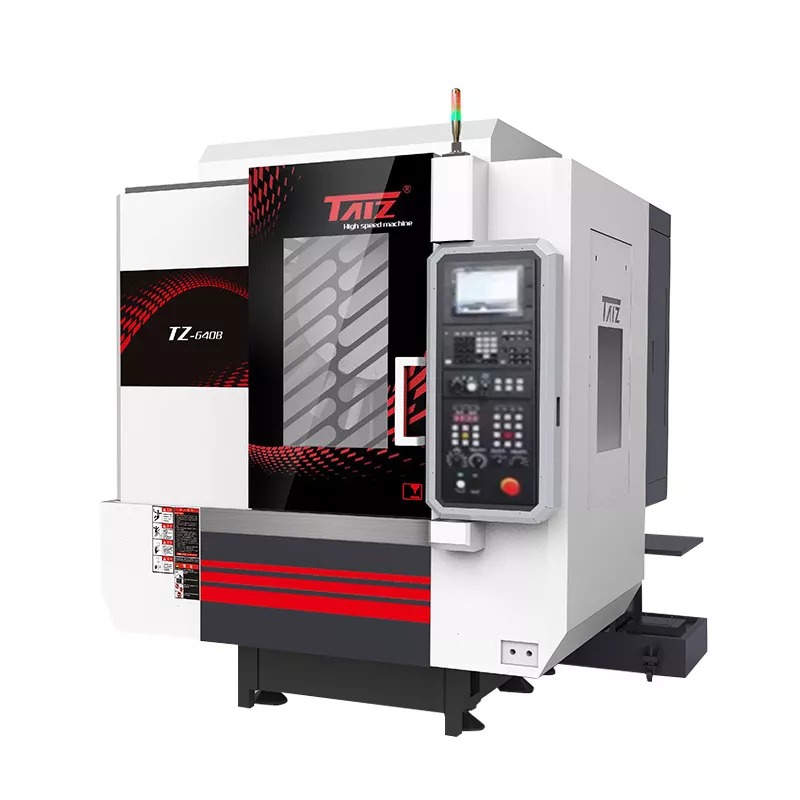
Material waste is a significant concern in sheet metal fabrication. Traditional methods often lead to excess scrap, increasing material costs and environmental impact. CNC machines, however, can optimize the layout of parts on a metal sheet using advanced nesting software. This ensures that the parts are arranged in the most efficient way possible, maximizing the use of each sheet and reducing waste. By minimizing scrap, manufacturers can significantly lower material costs and improve the sustainability of their operations.
Key Benefits of Material Optimization:
undefined Reduced material costs
undefined Increased sustainability
undefined Lower environmental footprint
undefined Higher production yield
By reducing material waste, CNC machines contribute to a more sustainable manufacturing process. Less scrap means fewer raw materials are needed, which not only saves money but also reduces the environmental impact associated with manufacturing. As businesses are increasingly under pressure to adopt greener practices, the ability to minimize waste through CNC machining provides a competitive advantage. Additionally, the efficient use of materials helps companies meet sustainability goals, making their operations more environmentally friendly.
There is a variety of CNC machines used in sheet metal fabrication, each designed for specific tasks like cutting, bending, or punching. These machines provide the precision needed for different metalworking applications. TAIZ offers a wide range of CNC solutions that help manufacturers efficiently handle diverse sheet metal operations.
CNC Machine Type | Application | Features |
Laser Cutter | Precision cutting for detailed shapes | High accuracy, ideal for thin sheets |
Plasma Cutter | Fast cutting for thick metal sheets | High-speed, effective for thick materials |
Punch Press | High-speed hole punching and shaping | Ideal for mass production |
Press Brake | Accurate metal bending for complex designs | Precise bending for thick materials |
One of the biggest advantages of CNC technology is the ability to quickly modify designs and create custom parts. Traditional tooling methods require significant investment and time to change molds or dies, but CNC systems can be reprogrammed easily, enabling rapid design changes without expensive retooling. This flexibility makes CNC machining ideal for industries that require quick turnaround times for custom parts. Whether it’s a prototype or a short-run production job, CNC machines allow manufacturers to stay agile and meet specific customer demands.
In mass production, consistency is key. CNC machines ensure that every part produced is identical, offering repeatable precision that is difficult to achieve with manual methods. By using the same program repeatedly, manufacturers can produce large batches of parts without the variation that often occurs with manual processes. This is especially beneficial for industries like automotive and aerospace, where consistent part quality is critical.
Quality control is an essential part of the manufacturing process. CNC machines help maintain high quality by eliminating human error and ensuring that every part is made to the same specifications. Once the program is set, the machine automatically produces parts with the same measurements and dimensions, reducing the need for time-consuming inspections. In addition, CNC systems can integrate with other tools like Coordinate Measuring Machines (CMMs) to verify the quality of parts automatically, ensuring that each one meets strict standards.
CNC technology is constantly evolving, with new innovations enhancing its capabilities. For instance, the integration of artificial intelligence (AI) and machine learning algorithms enables CNC machines to become even more efficient and autonomous. These advancements allow machines to learn from previous operations and optimize future processes, improving productivity and reducing costs. TAIZ is at the forefront of these technological advancements, continually developing new solutions for the future of sheet metal fabrication.
Industry 4.0 represents the integration of smart technologies into manufacturing processes. CNC machines are central to this revolution, connecting to IoT (Internet of Things) devices and other systems to gather real-time data. By analyzing this data, manufacturers can optimize operations, improve quality control, and even predict maintenance needs, reducing downtime. As part of Industry 4.0, CNC machines are becoming more connected, providing manufacturers with greater control over their operations.
Sustainability remains a key focus for modern manufacturers, and CNC machines are playing a significant role in reducing energy consumption and material waste. With the increasing demand for eco-friendly practices, CNC technology offers a way to improve efficiency and reduce the environmental impact of manufacturing. Future CNC systems are expected to be even more energy-efficient, contributing to sustainability efforts across industries.
In a competitive market, staying ahead of the curve is essential. Investing in CNC machines gives manufacturers a significant edge by improving production speed, quality, and flexibility. By automating processes, reducing material waste, and ensuring high precision, CNC systems enable manufacturers to produce high-quality parts more efficiently than ever before. TAIZ’s advanced CNC equipment ensures businesses can stay competitive, delivering top-notch results on time and within budget.
CNC machines play a crucial role in reducing production lead times. By automating processes, manufacturers can cut down on the time it takes to produce parts, allowing them to meet deadlines more effectively. The ability to quickly switch between different part designs also allows businesses to respond faster to customer demands, providing a competitive advantage in industries with tight timelines.
While the initial investment in CNC machines may be high, the long-term savings are significant. With increased efficiency, reduced material waste, and lower labor costs, CNC machines quickly pay for themselves. By improving productivity and quality, businesses can achieve substantial cost savings in the long run, making CNC technology a wise investment for sheet metal fabricators.
Benefit | Impact |
Faster production | Increases throughput |
Reduced lead times | Meets deadlines effectively |
Lower long-term costs | Saves on materials and labor |
CNC machines have revolutionized sheet metal fabrication by improving precision, efficiency, and flexibility. As demand for faster and higher-quality production increases, CNC technology has become indispensable. It automates processes like cutting, bending, and punching while optimizing material use for repeatable, high-quality results. Companies like TAIZ are leading the way with advanced CNC solutions, offering products that reduce labor costs, enhance sustainability, and boost production capacity. As technology evolves, smart CNC systems will continue to drive innovation and efficiency in sheet metal fabrication.
A: A CNC machine is a computer-controlled tool that automates processes like cutting, bending, and punching sheet metal. It ensures high precision and repeatability, making it ideal for creating complex parts in industries like automotive and aerospace.
A: CNC machining enhances sheet metal fabrication by automating tasks, increasing efficiency, and reducing material waste. It allows for faster production, higher precision, and repeatable results, making it essential for modern manufacturing.
A: Sheet metal fabricators use CNC machines to improve production speed, accuracy, and consistency. CNC systems automate repetitive tasks, reduce labor costs, and enable manufacturers to produce high-quality parts with minimal errors.
A: CNC machines provide several benefits, including faster production times, precise cutting, reduced material waste, and the ability to handle complex designs. This integration helps manufacturers stay competitive by improving efficiency and quality.
A: The cost of CNC machining equipment varies based on machine type, size, and capabilities. While the initial investment can be high, the long-term savings in labor costs, increased productivity, and reduced material waste make CNC machines a cost-effective solution for many manufacturers.
A: Yes, CNC machines are designed to handle intricate sheet metal designs with high precision. They can produce complex cuts, shapes, and bends that would be difficult or impossible to achieve with manual methods, making them ideal for advanced manufacturing.


